What Is RF Microneedling? A 2026 Guide
- Articles
What is RF microneedling, in plain terms?
RF microneedling combines two established skin treatments, microneedling and radiofrequency heat, into a single procedure that works in the deeper layers of the skin. If you have seen the term on a clinic’s treatment list, or you are a practitioner weighing it for your own service menu, this guide covers what it does, what results to expect, and who it suits.
RF microneedling sends radiofrequency energy into the skin through very fine needles, heating the deeper layer to prompt new collagen while the needles create tiny channels at the surface. Platforms such as POTENZA deliver this through a range of needle tips and energy settings, so one device can address concerns from fine lines to acne scarring. The needle action renews surface texture; the heat tightens and rebuilds the structure underneath.
Disclaimer: This article is intended for general information and education only. It is not medical advice and does not replace a consultation with a qualified, licensed medical or aesthetic practitioner. Treatment suitability, settings and outcomes vary between individuals, so always seek a professional assessment before deciding on any aesthetic procedure. POTENZA is a registered trademark of Jeisys Medical Inc. and is a CE-marked device intended for use in dermatologic and electronic surgical procedures for electrocoagulation and hemostasis.
How it works
Standard microneedling uses fine needles to make controlled micro-channels in the skin. The body reads these as small injuries and begins its natural repair process, which includes producing fresh collagen and elastin over the following weeks.
RF microneedling adds a second mechanism. Once the needles reach the chosen depth, the device passes radiofrequency energy through them, and that energy becomes heat inside the skin. Controlled heat does something needles alone cannot: it causes existing collagen to contract straight away and triggers a longer rebuild of new collagen over the months that follow. Because the energy travels down the needle, the heat lands where it is useful, in the deeper layer, while the surface is largely spared. That targeting is why RF microneedling can treat deeper concerns like laxity and scarring with less surface trauma than older resurfacing methods.
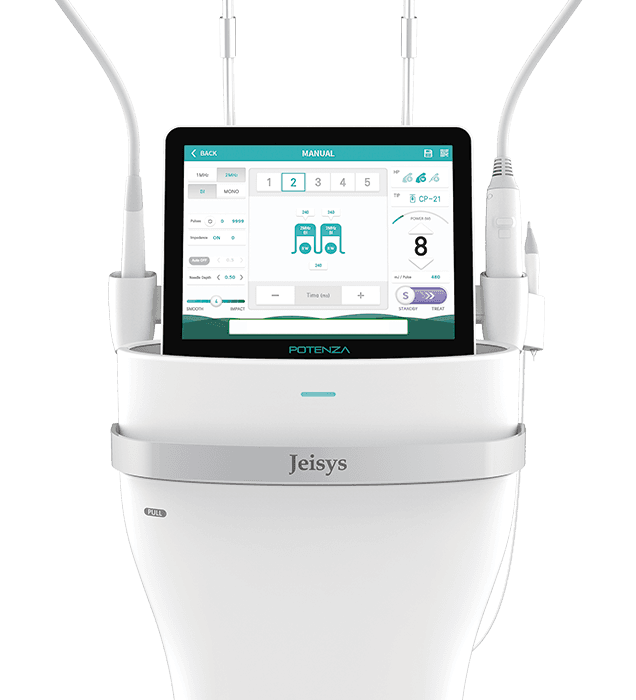
Depth is adjustable, typically from a fraction of a millimetre up to around four millimetres, so the energy can sit in the right layer for the concern being treated. On a system like POTENZA, the operator also selects the mode and frequency, which changes how broad or focused the heating is, and real-time impedance monitoring adjusts the energy as it reads the skin’s resistance.

Which patients is POTENZA is for, and who is not for?
RF microneedling suits people who want to improve skin quality without surgery and can accept a short recovery. It tends to be a good fit for:
- Early to moderate skin laxity along the jaw, cheeks and neck
- Acne scarring and other textural concerns
- Fine lines, enlarged pores and uneven texture
- Stretch marks on the body
- All Fitzpatrick skin types, because RF energy works below the surface and largely bypasses the pigment in the outer layer (settings are still chosen more conservatively for darker skin to reduce the risk of pigment change)
It is not for everyone. People who should avoid it, or who need medical clearance first, include anyone pregnant or breastfeeding, anyone with a pacemaker or other implanted electronic device, those with metal implants in the treatment area, active infection, cold sores or inflamed acne in the area, a history of keloid scarring, or anyone currently taking isotretinoin (a wait of around six months after finishing is usual). A consultation exists to catch exactly these points, so be candid about your history and medication.
How does RF microneedling compare to traditional microneedling?
Traditional microneedling improves the surface: texture, fine lines and overall radiance. It is gentler and cheaper per session, but it does not reach the deeper structure, so it usually needs more sessions to shift anything beyond surface quality.
RF microneedling treats both at once. The needles refine the surface while the heat addresses laxity and deeper scarring in the same appointment. For purely superficial goals, standard microneedling may be enough. For tightening, scarring or structural change, the radiofrequency version does more in fewer sessions. We cover this in detail in another Potenza Blog coming very soon.
Results and timeline
Most people need a short course rather than a single visit. A typical plan is around three sessions spaced four to six weeks apart, though this varies with the concern and the device.
Recovery is short. Expect redness and a warm, mild-sunburn feeling for the first 24 to 48 hours, and possibly some pinpoint bleeding or light swelling on the day. Most people return to normal activities within one to three days, which is why these treatments are often called “lunchtime” procedures.
Results arrive in two waves. Early improvement in texture and tone shows within two to four weeks as the skin repairs. The larger change, the new collagen that firms and tightens, builds over three to six months because collagen takes time to form. Results commonly last 12 to 18 months depending on age, skin condition and lifestyle, with maintenance every 6 to 12 months to keep them topped up as natural ageing continues.
A note from the Jeisys Europe Team
The biggest single factor in a good outcome is how well the POTENZA settings are matched to the skin in front of you. Energy level, needle depth and speed all need to suit the area and the skin type, and starting conservatively then building up is safer than chasing aggressive redness. This is the reasoning behind POTENZA’s real-time impedance monitoring, which measures the skin’s resistance and adjusts energy as it treats, so the intended dose is delivered even as hydration varies across the face.

Summary
RF microneedling is microneedling with a heat upgrade: the needles renew the surface while radiofrequency energy rebuilds collagen in the deeper skin, which lets one treatment address texture, scarring and mild laxity together. To see how a precision platform delivers it across different concerns and skin types, read how POTENZA works.
Frequently asked questions on RF Microneedling in 2026
Most people find it manageable. A numbing cream is applied beforehand, and the sensation during treatment is usually described as heat with a light prickle. Comfort depends partly on the device and the operator’s technique; smoother, motorised needle insertion tends to feel better than manual methods.
Surface improvements in texture and tone often appear within two to four weeks. The deeper tightening from new collagen develops over three to six months, so the full result is gradual rather than immediate.
RF microneedling is generally considered suitable for all Fitzpatrick skin types because the energy works below the surface and largely bypasses surface pigment. Settings are chosen more conservatively for darker skin tones to reduce the small risk of post-inflammatory pigment change.
A course of around three sessions, four to six weeks apart, is common, with maintenance every 6 to 12 months. The exact number depends on your concern and how your skin responds.
RF microneedling is the category of treatment. POTENZA is a specific RF microneedling platform, a CE-marked device used in clinics, known for offering both Monopolar and Bipolar modes and a wide choice of needle tips so one machine can treat a range of concerns.
Yes. It is often paired with topicals such as hyaluronic acid, polynucleotides or exosomes, because the micro-channels can help these reach deeper into the skin. Your practitioner will advise what is appropriate for you.
The cost of a treatment will depend on the individual provider / physician or clinic you visit. This is why its very important to do your research and ensure the physician is accredited, approved user of POTENZA.


