Is RF Microneedling Safe? What the Evidence Says
- Articles
RF microneedling has a strong safety record when it is performed by a trained practitioner on a suitable patient, with most side effects mild and short-lived. The points that matter for safety are who should avoid it, how the settings are chosen, and how to tell a normal reaction from one that needs attention. This guide covers each.
Is RF microneedling safe?
RF microneedling is widely regarded as safe when carried out by a qualified practitioner using appropriate settings, and serious complications are uncommon. Most people experience only redness, mild swelling and a warm sensation for a day or two. It is suitable across all Fitzpatrick skin types because the energy works below the surface. POTENZA is a CE-marked device, and its real-time energy feedback is designed to support consistent, controlled treatment. Safety still depends on correct patient selection and parameter choice, which is why a consultation matters.
Why RF microneedling is considered low-risk
Two features of the treatment underpin its safety profile. First, the radiofrequency energy is delivered at a chosen depth through the needle, and the outer layer of skin is largely spared, which reduces surface trauma. Second, because the energy works below the surface and does not target pigment, the risk of the pigment changes that can follow some light-based treatments is lower, including in darker skin tones.
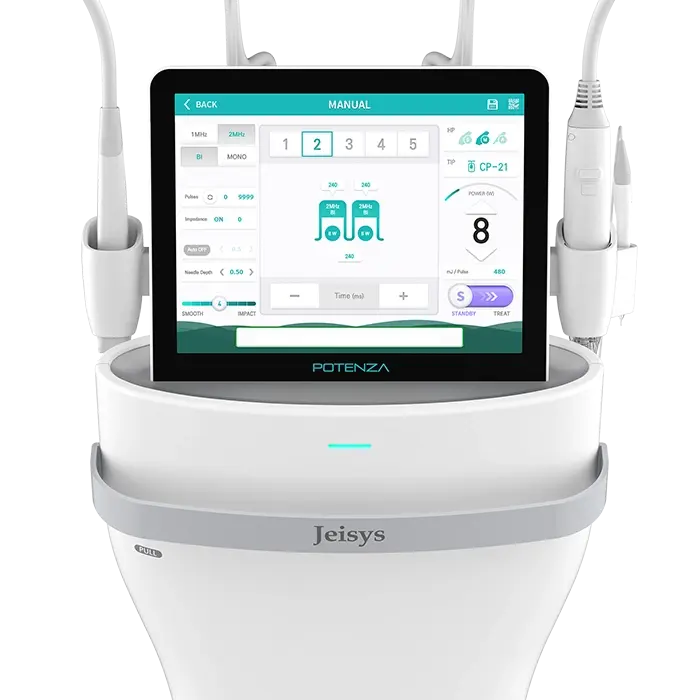
On POTENZA specifically, three design features support safety: real-time impedance monitoring, which measures the skin’s resistance and adjusts the energy so dry areas are not under-treated and hydrated areas are not over-treated; Parylene-coated needles, which provide an insulating barrier so energy is released where intended; and motorised needle insertion, which enters and exits the skin cleanly to reduce the micro-tearing that can prolong redness.
Disclaimer: This article is intended for general information and education only. It is not medical advice and does not replace a consultation with a qualified, licensed medical or aesthetic practitioner. Treatment suitability, settings and outcomes vary between individuals, so always seek a professional assessment before deciding on any aesthetic procedure. POTENZA is a registered trademark of Jeisys Medical Inc. and is a CE-marked device intended for use in dermatologic and electronic surgical procedures for electrocoagulation and hemostasis.
Who should not have RF microneedling
Correct patient selection is the single most important safety step. RF microneedling is not suitable, or needs medical clearance first, for anyone with:
- A pacemaker or any implanted electronic device
- Metal implants in or near the treatment area
- A cardiovascular condition that contraindicates the treatment
- Active skin infection, open wounds, or inflamed acne in the area
- Active cold sores or herpes simplex in the area
- A history of keloid scarring
- Pregnancy or breastfeeding
- Current use of isotretinoin (a wait of around six months after finishing is usual)
- An autoimmune condition or compromised immune system
- A blood-clotting disorder or use of anticoagulant medication
- Active cancer, or a history of skin cancer in the treatment area
Be open with your practitioner about your medical history and medication. These questions exist to keep the treatment safe, not to catch you out.
Normal reactions versus warning signs
Knowing what is expected makes the recovery less worrying.
Expected and normal: redness that looks like mild sunburn for 24 to 48 hours, mild swelling, a warm or tingling feeling, and possibly pinpoint bleeding on the day of an invasive treatment. These settle within a couple of days.
Worth contacting your practitioner about: spreading redness or heat after the first few days, signs of infection such as pus or increasing pain, blistering, or any reaction that is getting worse rather than better. Genuine complications are uncommon, but prompt advice is sensible if something does not look right.
How settings affect safety
Most adverse events come down to parameter choice rather than the device itself. Energy that is too high, too many passes over the same area, or a needle speed that does not match the tissue can cause prolonged redness, marks or, rarely, scarring. The safe approach is to start conservatively and build based on how the skin responds, and to stop at a uniform pink flush rather than pushing for aggressive redness. For darker skin types, more measured settings keep the small risk of post-inflammatory pigment change low.
A note from the Jeisys Europe Team
Safety in RF microneedling is mostly about control and judgement, not raw power. The reason POTENZA was built around impedance feedback, insulated needles and motorised insertion is to narrow the margin for human error and energy spikes, so the treatment stays within a predictable, controlled range. That said, no device replaces a careful consultation and a practitioner who matches the settings to the skin in front of them.
Conclusion and next step
RF microneedling is a low-risk treatment in trained hands, with most reactions mild and brief, provided patient selection and settings are right. To understand the safeguards built into the platform, read about the technology behind POTENZA.
Frequently asked questions on RF Microneedling in 2026
Yes. Because the radiofrequency energy works below the surface and does not target pigment, RF microneedling is generally considered safe across all Fitzpatrick skin types. Conservative settings are used for darker skin to keep the small risk of pigment change low.
The common side effects are redness, mild swelling, a warm sensation and sometimes pinpoint bleeding on the day, all of which usually settle within 24 to 48 hours. More significant complications are uncommon and are usually related to settings rather than the device.
POTENZA is CE marked for use in Europe and the UK, and is also FDA cleared, intended for use in dermatologic and electronic surgical procedures for electrocoagulation and hemostasis. Always check that any clinic uses a properly certified device.
Scarring is rare and almost always linked to overly aggressive settings or too many passes rather than the treatment itself. A trained practitioner using conservative, skin-matched parameters keeps this risk very low.
Anyone with a pacemaker or implanted electronic device, active skin infection, a history of keloid scarring, who is pregnant or breastfeeding, or who is taking isotretinoin should avoid it or seek clearance first. A full list is covered in the consultation.
No. RF microneedling is not recommended during pregnancy or breastfeeding. It is best postponed until afterwards, and your practitioner can advise on timing.


