
How Many RF Microneedling Sessions Will I Need?
- Articles
The number of RF microneedling sessions you need depends on what you are treating and how your skin responds, but most concerns work best as a short course rather than a single visit. This guide explains the typical numbers, why spacing matters, and what changes between session one and the end of a course.
How many RF microneedling sessions do you need?
Most people need a course of around three sessions, spaced four to six weeks apart, with maintenance every 6 to 12 months. Lighter or maintenance goals may need fewer; deeper concerns such as acne scarring can need more. The spacing matters because new collagen takes weeks to form, so the gap lets each session build on the last. A versatile platform like POTENZA lets the practitioner tailor the plan to the concern rather than applying a fixed protocol.
Why a course rather than a single session
RF microneedling works by prompting the skin to build new collagen, and that is a cumulative process. A single session starts it, but repeated, well-spaced sessions compound the effect: each one adds another round of stimulation while the previous round is still maturing. This is why a course generally gives a noticeably better and longer-lasting result than one treatment, even though some early improvement is visible after the first session.
Disclaimer: This article is intended for general information and education only. It is not medical advice and does not replace a consultation with a qualified, licensed medical or aesthetic practitioner. Treatment suitability, settings and outcomes vary between individuals, so always seek a professional assessment before deciding on any aesthetic procedure. POTENZA is a registered trademark of Jeisys Medical Inc. and is a CE-marked device intended for use in dermatologic and electronic surgical procedures for electrocoagulation and hemostasis.
Typical numbers by concern
These are general guides. Your practitioner will set a plan after assessing your skin.
- General skin quality and texture: around 3 sessions, four to six weeks apart.
- Fine lines and early laxity: around 3 sessions, sometimes more for firmer results.
- Acne scarring: often 3 to 4 or more, depending on depth and type of scarring, as scars respond gradually.
- Stretch marks: usually a course of 3 or more, with results building over months.
- Maintenance: a single session every 6 to 12 months once the initial course is complete.
Why spacing matters
The four to six week gap between sessions is not arbitrary. It allows the initial healing and the early collagen response to get under way before the next round of stimulation, which makes the course more effective and keeps the skin from being over-treated. Rushing sessions closer together does not speed up collagen formation and can increase irritation. Patience between appointments is part of the result.
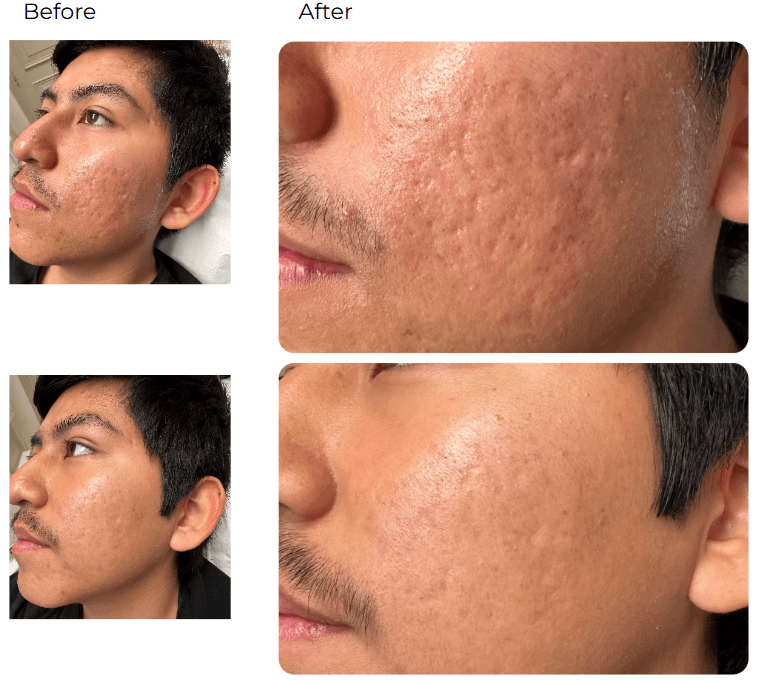
What changes across a course
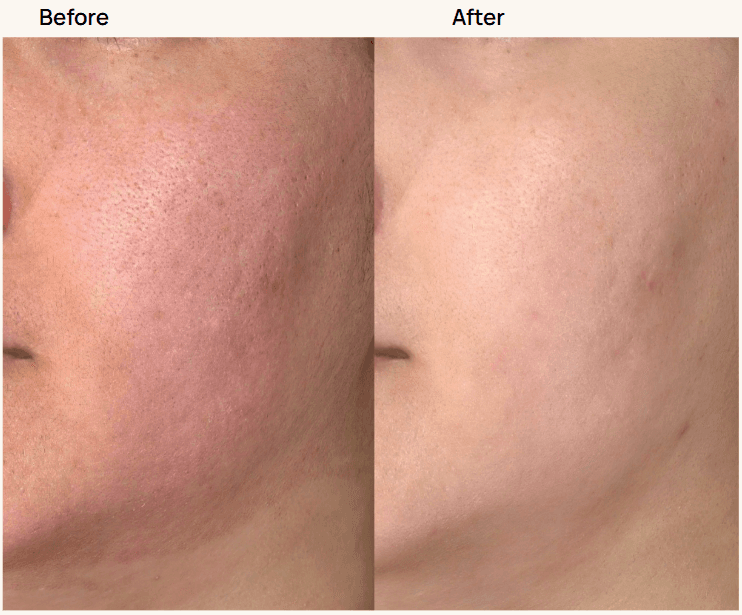
After the first session, many people notice fresher texture and tone within a few weeks, though this early improvement can be subtle. By the second and third sessions, the cumulative collagen building becomes more apparent, with firmer, smoother skin and gradual improvement in scarring or stretch marks. The fullest result is usually judged a few months after the final session, once the collagen response has matured. This is why before-and-after comparisons taken after a completed course are more informative than those after a single visit.
Keeping your results
RF microneedling does not stop natural ageing, so results are maintained rather than permanent. After the initial course, a maintenance session every 6 to 12 months tops up collagen as the skin continues to change. Daily sun protection and a consistent skincare routine extend the time between maintenance treatments by protecting the collagen you have built.
A note from the Jeisys Europe Team
There is no universal session count, and any clinic quoting one without seeing your skin is guessing. The right number depends on the concern, its severity, your age and how your skin responds, which is why the plan should come out of a consultation. The advantage of a customisable platform like POTENZA is that the practitioner can adjust depth, mode and energy from session to session as your skin changes, rather than repeating an identical treatment each time.

Conclusion and next step
Most RF microneedling concerns respond best to a course of around three sessions four to six weeks apart, with maintenance once or twice a year, though the exact number is set by your concern and your skin. To see the kind of results a full course can achieve, view proven results with POTENZA.
Frequently asked questions on RF Microneedling in 2026
Acne scarring usually needs a course of three to four sessions or more, depending on the depth and type of scarring, because scars improve gradually. Your practitioner will assess your skin and set a realistic plan.
Typically four to six weeks. The gap lets the early collagen response and healing progress before the next session, which makes the course more effective and avoids over-treating the skin.
Often some early improvement in texture and tone shows within a few weeks of the first session, but it can be subtle. The fuller result builds across a course and matures in the months after the final session.
Most people have a maintenance session every 6 to 12 months after completing the initial course, to top up collagen as the skin continues to age. Sun protection and good skincare can extend this interval.
Sessions are spaced deliberately so the skin is not over-treated. More sessions than needed, or sessions too close together, can cause unnecessary irritation without improving the result. A practitioner-set plan keeps the course appropriate.