
How RF Microneedling Works: The Science of Heat and Needles
- Articles
RF microneedling works by triggering two repair processes in the skin at the same time: the mechanical response to fine needles, and the thermal response to radiofrequency heat delivered through them. Understanding how the two combine explains why the treatment can do more than either microneedling or surface radiofrequency on its own.
What does RF microneedling actually do to the skin?
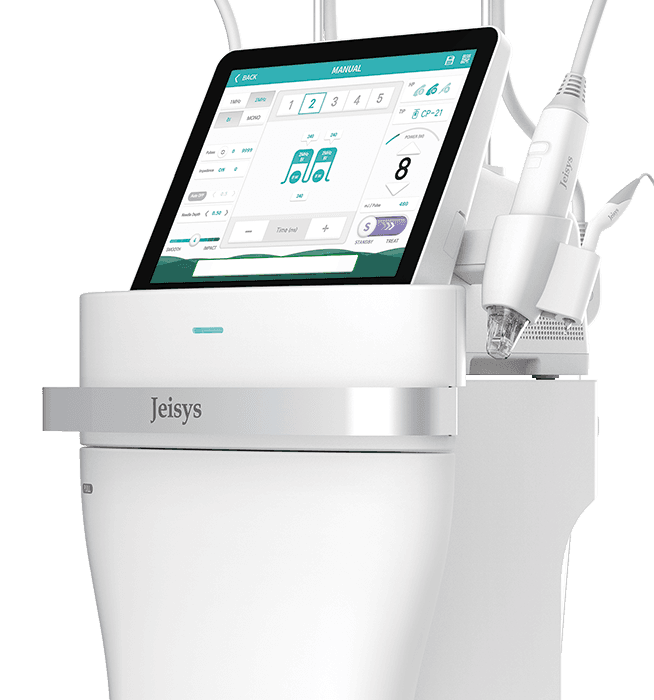
RF microneedling creates controlled micro-channels with fine needles and, in the same pass, releases radiofrequency energy from those needles to heat the deeper layer of skin. The needles prompt natural repair and renew the surface; the heat contracts existing collagen and drives new collagen growth over the following months. On a platform like POTENZA, the depth, energy mode and frequency are all adjustable, so the same mechanism can be tuned for different concerns.
Disclaimer: This article is intended for general information and education only. It is not medical advice and does not replace a consultation with a qualified, licensed medical or aesthetic practitioner. Treatment suitability, settings and outcomes vary between individuals, so always seek a professional assessment before deciding on any aesthetic procedure. POTENZA is a registered trademark of Jeisys Medical Inc. and is a CE-marked device intended for use in dermatologic and electronic surgical procedures for electrocoagulation and hemostasis.

The two treatment pathways, explained
The mechanical pathway.
When fine needles enter the skin, they create tiny channels and a controlled micro-injury. The body responds with its normal wound-healing cascade: it releases growth factors and begins producing fresh collagen and elastin. This is the same process behind traditional microneedling, and it is what refines surface texture and softens fine lines.
The thermal pathway.
Radiofrequency is a form of energy that meets resistance as it passes through tissue, and that resistance turns it into heat. In RF microneedling, the energy is delivered through the needle tips directly into the deeper layer. Controlled heat there does two useful things: it tightens the collagen that already exists almost immediately, and it stimulates a slower, longer process of new collagen and elastin formation that continues for months.
Run together, the two pathways reinforce each other. The micro-channels open routes for repair and for any topical applied during the treatment, while the heat reaches the structural layer that needles alone cannot affect. The practical result is improvement to both surface texture and underlying firmness from a single session, which is the core reason RF microneedling has become a mainstay of modern skin treatment.
Why deliver the heat through needles?
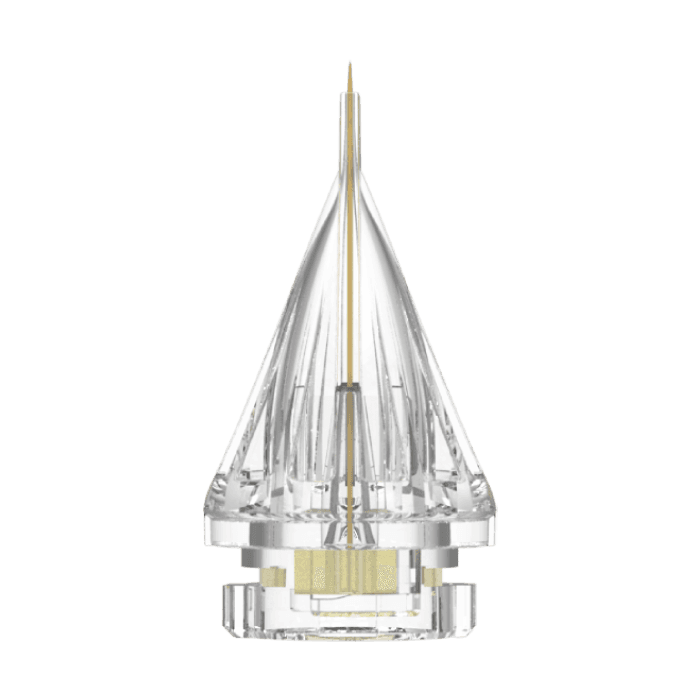
Surface-applied radiofrequency (RF) has to travel through the outer layer of skin to reach the depth where remodelling happens, and the outer layer can only tolerate so much heat before it is at risk. Delivering the energy through an insulated needle skips that problem. The heat is released at the needle tip, at a depth the operator chooses, so the deeper layer can be treated firmly while the surface stays comparatively protected. That is why RF microneedling can work on deeper concerns with a shorter recovery than older resurfacing approaches.
Who benefits most from understanding the mechanism
For a patient, the mechanism explains the timeline: the needle part gives early surface improvement, and the heat part is why the firming keeps developing for months. For a practitioner, it explains why parameter selection matters more than raw power, and why a platform that lets you control depth, mode and energy feedback gives more predictable outcomes across different skin types and concerns.
Results and timeline
Because two processes are at work, results appear in stages. Texture and tone often look fresher within two to four weeks. The collagen-driven firming builds over three to six months. A short course, usually around three sessions four to six weeks apart, gives the skin repeated stimulation, and maintenance every 6 to 12 months sustains the effect.
Conclusion and next step
RF microneedling works by pairing the skin’s natural response to fine needles with the collagen-building effect of controlled heat delivered at depth, which is why it improves both surface texture and underlying firmness. To see how the modes, tips and feedback system come together in practice, read about the technology behind POTENZA.
Frequently asked questions about How RF Microneedling Works
Most lasers act mainly on or near the surface using light energy. RF microneedling delivers heat through needles into the deeper layer using radiofrequency, and adds the mechanical effect of microneedling. The depth control and the fact that RF largely bypasses surface pigment are key practical differences.
The added heat is noticeable, but numbing cream is used and many people tolerate it well. On systems like POTENZA, comfort is helped by smooth needle insertion and energy that adjusts to the skin rather than staying fixed.
Depth is adjustable, commonly from around a quarter of a millimetre to four millimetres. The operator chooses the depth to suit the concern, shallower for surface texture and deeper for laxity or scarring.
Impedance is the skin’s resistance to the energy. Real-time impedance monitoring, a feature of POTENZA, measures that resistance during treatment and adjusts the energy so the intended dose is delivered even as skin hydration varies.
Because new collagen takes time to form. The heat starts a remodelling process that continues for three to six months, so firmness improves gradually rather than all at once.