
Insulated vs Semi-Insulated Needles | Jeisys Medical Inc
- Articles
The needles used in RF microneedling are not all the same, and the type of needle changes where the energy is released in the skin. Insulated and semi-insulated needles suit different goals. This guide explains the difference in plain terms and why it affects the kind of result a treatment can deliver.
What is the difference between insulated and semi-insulated needles?
Insulated needles release radiofrequency energy only at the very tip, concentrating the heat in a small, precise spot. Semi-insulated needles release energy along part of the needle shaft as well, spreading heat through a wider area in a single pass. Insulated needles are the precision tool; semi-insulated needles are the volumetric tool. Both can reach the same depths, and a platform like POTENZA offers both so the practitioner can choose precision or coverage to suit the concern.
Same depth, different delivery
A common misunderstanding is that the needle type changes how deep the treatment goes. It does not; both insulated and semi-insulated needles can be set across a wide depth range, commonly from around half a millimetre to four millimetres. What changes is where along the needle the energy is released, and therefore how the heat is distributed once the needle is at depth. This is the key idea: same reach, different spread.
Disclaimer: This article is intended for general information and education only. It is not medical advice and does not replace a consultation with a qualified, licensed medical or aesthetic practitioner. Treatment suitability, settings and outcomes vary between individuals, so always seek a professional assessment before deciding on any aesthetic procedure. POTENZA is a registered trademark of Jeisys Medical Inc. and is a CE-marked device intended for use in dermatologic and electronic surgical procedures for electrocoagulation and hemostasis.
Insulated needles: the precision tool
With an insulated needle, the energy is restricted to the very tip, so the heat is concentrated in a small, controlled spot at the chosen depth, while the rest of the needle track and the upper skin are spared. This makes insulated needles the precision choice, suited to targeted treatment where sparing the surrounding skin matters, such as delicate areas or focused work. It is the classic RF microneedling configuration with good protection of the outer skin.
Semi-insulated needles: the volumetric tool
With a semi-insulated needle, energy is released from more than one point along the shaft, so the heat spreads through a wider volume of skin in a single pass. This makes semi-insulated needles the volumetric choice, suited to broader treatment where covering more tissue efficiently is the goal, treating superficial and deeper skin together. The trade-off is coverage and efficiency over pinpoint precision.
Why the needle coating matters
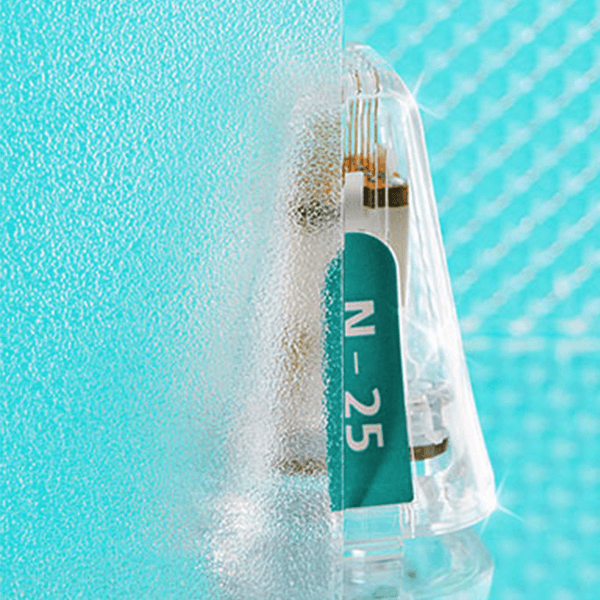
Beyond insulation, the quality of the needle coating affects performance. POTENZA needles use a Parylene coating, chosen for biocompatibility and a smooth, uniform surface. This reduces friction for more comfortable insertion, protects the needle from moisture for consistent energy delivery, and provides a reliable insulation barrier so energy is released where intended rather than leaking into the surface. A good coating is part of what keeps treatment safe and predictable.
How practitioners choose
The choice between insulated and semi-insulated needles, along with the number of needles in the tip, lets a practitioner tailor the treatment. Fewer needles concentrate energy for deeper, stronger effect; more needles spread energy more superficially across a wider area. Combined with the choice of insulation, this gives fine control over intensity, depth and coverage. A device with a broad tip range, such as POTENZA with its 14 tips, gives the practitioner the most options to match the treatment to the concern.
A note from the Jeisys Europe Team
The useful mental model is precision versus coverage. Insulated needles concentrate energy at the tip for targeted work; semi-insulated needles spread it for broader treatment. Neither is better in the abstract, what matters is having both available so the practitioner can choose the right tool for the concern, the area and the skin. That range, alongside a quality needle coating for comfort and consistent delivery, is central to why POTENZA is built around 14 tips rather than a single configuration.
Conclusion and next step
Insulated needles concentrate RF energy at the tip for precision, while semi-insulated needles spread it along the shaft for coverage, with both reaching the same depths and serving different goals. To explore the full tip range, read about POTENZA tips.
Frequently asked questions on Insulated vs Semi-Insulated Needles in RF Microneedling
Insulated needles release radiofrequency energy only at the very tip, concentrating heat in a precise spot at the chosen depth while sparing the surrounding skin. They are the precision option, suited to targeted work.
Semi-insulated needles release energy along part of the shaft as well as the tip, spreading heat through a wider area in one pass. They are the volumetric option, suited to broader, more efficient treatment.
No. Both can be set across the same wide depth range. The difference is where the energy is released along the needle, and therefore how the heat is distributed, not how deep it goes.
Parylene is a needle coating chosen for biocompatibility and a smooth surface. It reduces friction for comfort, protects the needle for consistent energy delivery, and provides a reliable insulation barrier so energy is released where intended.
They consider the concern, area and skin, then choose insulation type and needle count to set the right balance of precision, depth and coverage. A device with a wide tip range gives the most options to tailor treatment.