
How Much Does RF Microneedling Cost? A 2026 Guide
- Articles
RF microneedling pricing varies widely between clinics and countries, so the more useful question is what you are actually paying for. This guide explains the factors that drive the cost, why a course is priced differently from a single session, and how to judge value rather than chase the lowest number.
How much does RF microneedling cost?
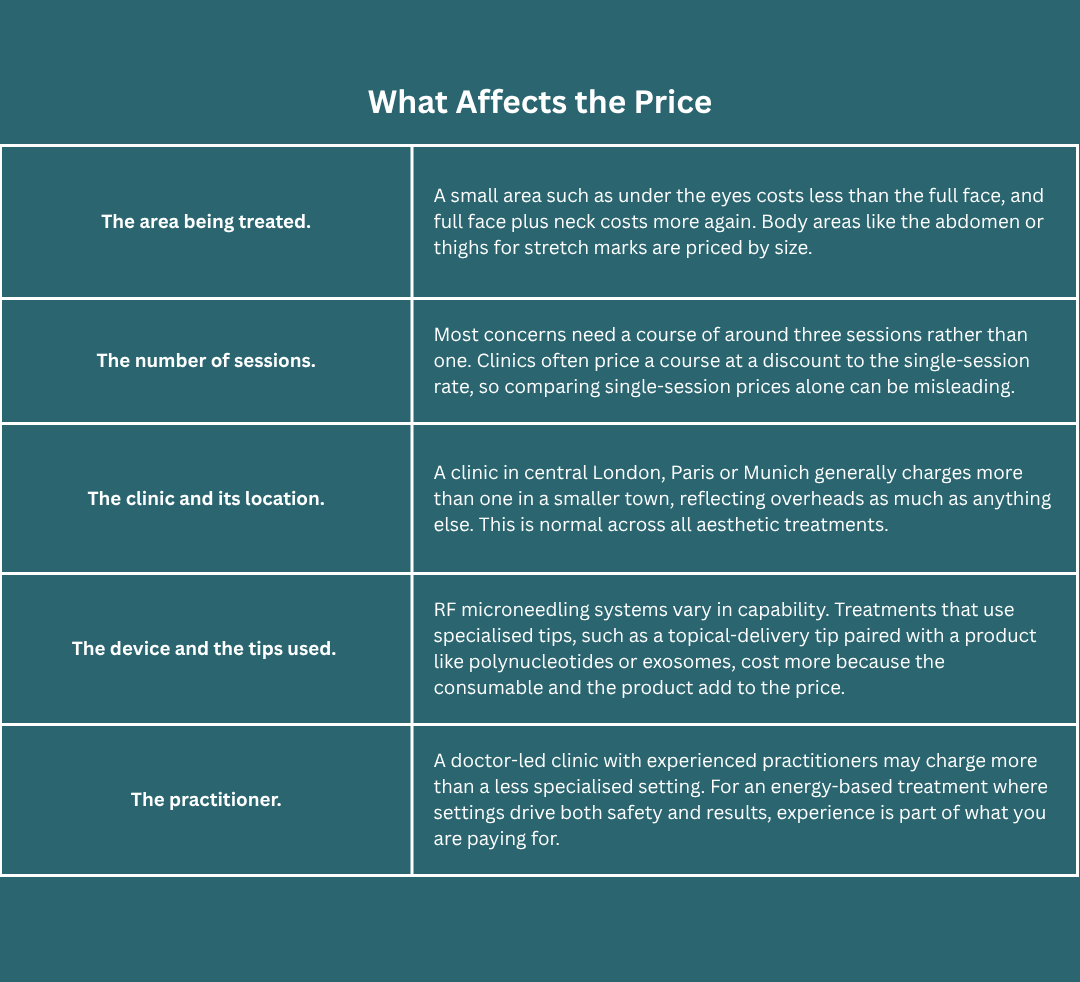
RF microneedling is usually priced per session or as a discounted course, and the cost depends on the treatment area, the number of sessions, the clinic’s location, the device used and the practitioner’s expertise. Prices differ significantly across the UK and Europe, so a consultation quote is the only reliable figure. As a manufacturer, Jeisys does not set treatment prices; clinics using POTENZA price their own services. Treat the per-session figure as one part of the picture and weigh it against the course needed for your goals.
Why the cheapest option is rarely the best value
With RF microneedling, the result depends heavily on how well the settings are matched to your skin. A lower price can reflect a less capable device, less experienced hands, or settings turned down to keep treatment times short. None of those serve you if the result falls short and you end up paying for extra sessions. Value is the result per pound or euro across the whole course, not the headline price of a single visit.
Single session versus a course
A single session can be appropriate for maintenance or a small, specific concern. For acne scarring, stretch marks, laxity or significant texture change, a course of around three sessions four to six weeks apart usually gives the result people are after. When comparing clinics, compare the cost of the full recommended course, and ask what maintenance, typically every 6 to 12 months, will add over time.
What is usually included
A quoted price normally covers the consultation (sometimes redeemable against treatment), numbing cream, the treatment itself and any aftercare guidance. Ask whether a review appointment is included, whether topical products used during the treatment are extra, and whether the course price is fixed if you book upfront. Clear answers here are a good sign of a well-run clinic.
A note from the Jeisys Europe Team
When patients ask us about cost, our consistent advice is to judge the practitioner and the plan, not just the price tag. RF microneedling is one of those treatments where the operator’s control over depth, energy and speed makes a real difference to the outcome, which is exactly why POTENZA is built around adjustable modes and real-time energy feedback. A slightly higher price for a well-matched treatment usually represents better value than a cheap session that needs redoing.

Conclusion and next step
RF microneedling cost comes down to the area, the number of sessions, the clinic and the expertise behind the settings, so the per-session price is only meaningful alongside the course your goals actually need. To understand what a capable platform offers and why it matters for results, read about the technology behind POTENZA.
Frequently asked questions on RF Microneedling in 2026
It varies widely by clinic, area and country, so there is no single figure. The full face costs more than a small area, and most clinics offer a discounted course rate. A consultation quote is the only reliable number.
Usually, yes. Clinics often price a course of around three sessions at a discount to the single-session rate. Since most concerns need a course, the course price is the figure worth comparing between clinics.
Because it adds radiofrequency energy and the technology to deliver and control it, treats the deeper layer as well as the surface, and often involves more advanced devices and tips. It typically needs fewer sessions for structural concerns, which can offset the higher per-session cost.
Usually the price covers numbing cream, the treatment and aftercare advice, but this varies. Ask whether the consultation, a review appointment and any topical products used during treatment are included.
For deeper concerns like laxity and scarring, many people find it worthwhile because it does more in fewer sessions than lighter treatments. Value depends on the result across the whole course rather than the single-session price.


