
RF Microneedling on the Body: Stomach, Arms and Beyond
- Articles
RF microneedling is not just for the face. It is increasingly used on the body to firm crepey skin and improve texture on areas like the abdomen, arms and thighs. It is important, though, to be clear about what it does and does not do, particularly around fat and cellulite. This guide sets out the realistic picture.
Does RF microneedling work on the body?
RF microneedling can firm crepey, loose skin and improve texture on body areas such as the stomach, arms, knees and thighs by stimulating collagen. It also helps the appearance of stretch marks. It is a skin-quality treatment, not a fat-loss or weight-loss procedure, and it does not reliably remove cellulite. Because body skin is thicker than facial skin, deeper energy settings are used, which a platform like POTENZA can deliver.
What body concerns it suits
The treatment works on skin quality and firmness, so it is well suited to:
- Crepey, loose skin on the abdomen, often after pregnancy or weight change
- Lax, lined skin on the upper arms and inner thighs
- Crepey texture on the knees and elbows
- Stretch marks, where it improves their appearance over a course
These are all collagen-related concerns, and rebuilding collagen is what RF microneedling does. Because the skin on the body is thicker and tougher than on the face, the practitioner uses deeper, appropriately stronger settings, and treatment can take a little longer to show results.
Disclaimer: This article is intended for general information and education only. It is not medical advice and does not replace a consultation with a qualified, licensed medical or aesthetic practitioner. Treatment suitability, settings and outcomes vary between individuals, so always seek a professional assessment before deciding on any aesthetic procedure. POTENZA is a registered trademark of Jeisys Medical Inc. and is a CE-marked device intended for use in dermatologic and electronic surgical procedures for electrocoagulation and hemostasis.
What it does not do
This is where honesty matters most, because body treatments attract some unrealistic expectations.
- It does not remove fat or cause weight loss. RF microneedling is a skin treatment. Some people ask whether it causes fat loss; it is not designed or reliably able to reduce fat, and it is not a body-contouring or weight-loss procedure.
- It does not reliably treat cellulite. Cellulite is a structural issue involving fat, connective tissue and skin. RF microneedling may modestly improve the skin-quality component, but it is not a dependable cellulite treatment, and anyone promising that is overstating it.
- It does not tighten significant loose skin. For substantial skin laxity, for example after major weight loss, the result is modest and a surgical option may be more appropriate.
A practitioner who is straight with you about these limits is a good sign.
Results and timeline
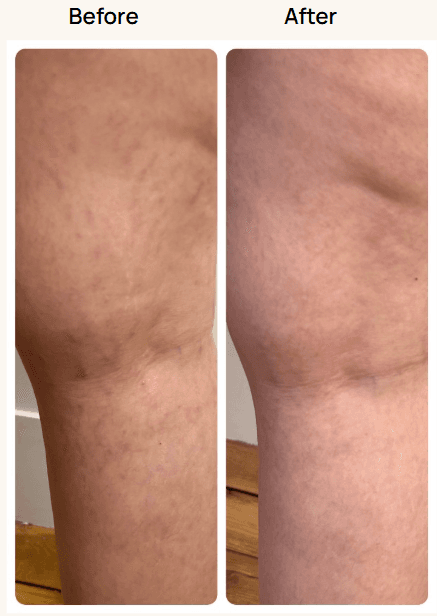
Body skin responds more slowly than the face because it is thicker, so patience helps. A course of three or more sessions, four to six weeks apart, is typical, with results building over three to six months as collagen forms. The improvement is firmer, smoother, less crepey skin and better-looking stretch marks, rather than fat reduction or a dramatic tightening. Maintenance helps preserve the result.
A note from the Jeisys Europe Team
Body treatment is genuinely useful for the right concern: crepey skin and texture respond well, and stretch marks improve. The mistake to avoid is expecting it to do a body-contouring job it was never meant for. RF microneedling firms and refines skin, it does not remove fat or melt cellulite. The advantage of a platform like POTENZA on the body is the depth and energy range needed for thicker skin, used by a practitioner who sets honest expectations about what skin-quality improvement looks like.
Conclusion and next step
RF microneedling firms crepey skin and improves texture and stretch marks on the body, but it is a skin-quality treatment, not a fat-loss or cellulite procedure. To understand the energy and depth range used for thicker body skin, read about the technology behind POTENZA.
Frequently asked questions on RF Microneedling on the Body
Yes, it can firm crepey, loose skin and improve texture on the abdomen, often after pregnancy or weight change, by rebuilding collagen. It is a skin treatment, not a way to reduce fat or lose weight.
Not reliably. Cellulite is a structural issue involving fat and connective tissue. RF microneedling may slightly improve the skin-quality element, but it is not a dependable cellulite treatment.
Usually three or more sessions, four to six weeks apart, with results building over three to six months. Body skin is thicker than facial skin, so it can respond more slowly.
It can firm mild to moderate crepey, lax skin on the arms by rebuilding collagen. For significant loose skin, the result is modest and a surgical option may be more appropriate, which a practitioner can advise on.