
RF Microneedling vs Traditional Microneedling: What's the Difference?
- Articles
Traditional microneedling and RF microneedling share the same needles but treat the skin at different depths. The short version: microneedling refines the surface, while RF microneedling adds heat to reach the deeper structure as well. This guide explains what that difference means for results, recovery and which one suits which concern.
What is the difference between RF microneedling and traditional microneedling?
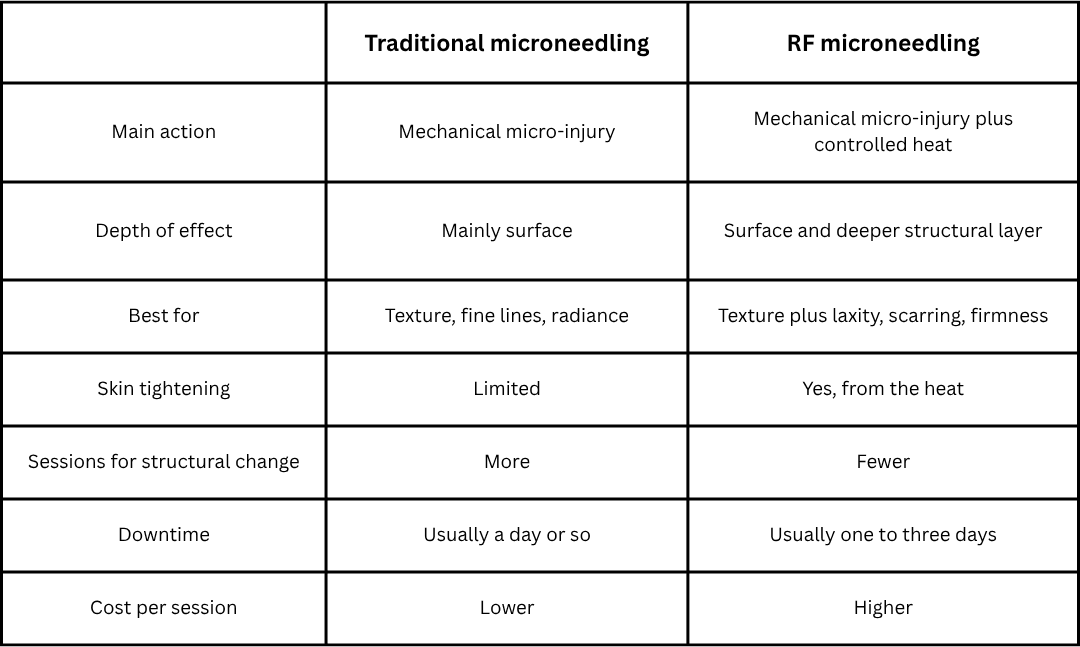
Traditional microneedling uses fine needles to renew the skin’s surface and improve texture. RF microneedling uses the same needles to deliver radiofrequency heat into the deeper layer, which adds skin tightening and stronger results for scarring on top of the surface benefits. Platforms such as POTENZA make the heat adjustable, so the deeper effect can be tuned to the concern. In practice, microneedling is the lighter option; RF microneedling does more in fewer sessions for structural concerns.
How each one works
Traditional microneedling relies on the mechanical effect of the needles alone. The controlled micro-channels prompt the skin’s natural repair, which produces fresh collagen and elastin over the following weeks. The effect is concentrated near the surface, so it improves texture, fine lines and overall radiance.
RF microneedling keeps that mechanical effect and adds a thermal one. Once the needles reach the chosen depth, radiofrequency energy passes through them and heats the deeper layer. That heat tightens existing collagen straight away and drives new collagen growth over several months. Because the energy is delivered at depth and the surface is largely spared, RF microneedling reaches the structural layer that plain microneedling cannot.
Why deliver the heat through needles?
Surface-applied radiofrequency has to travel through the outer layer of skin to reach the depth where remodelling happens, and the outer layer can only tolerate so much heat before it is at risk. Delivering the energy through an insulated needle skips that problem. The heat is released at the needle tip, at a depth the operator chooses, so the deeper layer can be treated firmly while the surface stays comparatively protected. That is why RF microneedling can work on deeper concerns with a shorter recovery than older resurfacing approaches.
Who each one is for
Traditional microneedling is a sensible choice if your goals are mainly surface-level: smoother texture, smaller-looking pores, a brighter complexion, or maintenance between bigger treatments. It is gentler and costs less per session.
RF microneedling earns its place when the concern is structural or deeper: early skin laxity, acne scarring, stretch marks, or firmness as well as texture. It does more per session, which often means fewer appointments overall for those goals.
Neither is universally “better”. The right choice depends on the concern, the skin type and the budget, which is exactly what a consultation is for. For some people, a course of microneedling is enough; for others, the heat is the part that delivers the result they want.
Results and timeline
With traditional microneedling, texture improvements build gradually and usually need a longer course to show meaningful change, particularly for anything beyond surface quality.
With RF microneedling, surface improvement appears within two to four weeks, and the deeper firming continues for three to six months as new collagen forms. A typical RF course is around three sessions four to six weeks apart, with maintenance every 6 to 12 months. Recovery is short for both, though RF microneedling can involve a little more redness and occasional pinpoint bleeding on the day because of the depth and the heat.
Results and timeline
Most people need a short course rather than a single visit. A typical plan is around three sessions spaced four to six weeks apart, though this varies with the concern and the device.
Recovery is short. Expect redness and a warm, mild-sunburn feeling for the first 24 to 48 hours, and possibly some pinpoint bleeding or light swelling on the day. Most people return to normal activities within one to three days, which is why these treatments are often called “lunchtime” procedures.
Results arrive in two waves. Early improvement in texture and tone shows within two to four weeks as the skin repairs. The larger change, the new collagen that firms and tightens, builds over three to six months because collagen takes time to form. Results commonly last 12 to 18 months depending on age, skin condition and lifestyle, with maintenance every 6 to 12 months to keep them topped up as natural ageing continues.
A note from the Jeisys Europe Team
The biggest single factor in a good outcome is how well the POTENZA settings are matched to the skin in front of you. Energy level, needle depth and speed all need to suit the area and the skin type, and starting conservatively then building up is safer than chasing aggressive redness. This is the reasoning behind POTENZA’s real-time impedance monitoring, which measures the skin’s resistance and adjusts energy as it treats, so the intended dose is delivered even as hydration varies across the face.

Conclusion and next step
RF microneedling works by pairing the skin’s natural response to fine needles with the collagen-building effect of controlled heat delivered at depth, which is why it improves both surface texture and underlying firmness. To see how the modes, tips and feedback system come together in practice, read about the technology behind POTENZA.
Frequently asked questions on RF Microneedling in 2026
Most people find it manageable. A numbing cream is applied beforehand, and the sensation during treatment is usually described as heat with a light prickle. Comfort depends partly on the device and the operator’s technique; smoother, motorised needle insertion tends to feel better than manual methods.
Surface improvements in texture and tone often appear within two to four weeks. The deeper tightening from new collagen develops over three to six months, so the full result is gradual rather than immediate.
RF microneedling is generally considered suitable for all Fitzpatrick skin types because the energy works below the surface and largely bypasses surface pigment. Settings are chosen more conservatively for darker skin tones to reduce the small risk of post-inflammatory pigment change.
A course of around three sessions, four to six weeks apart, is common, with maintenance every 6 to 12 months. The exact number depends on your concern and how your skin responds.
RF microneedling is the category of treatment. POTENZA is a specific RF microneedling platform, a CE-marked device used in clinics, known for offering both Monopolar and Bipolar modes and a wide choice of needle tips so one machine can treat a range of concerns.
Yes. It is often paired with topicals such as hyaluronic acid, polynucleotides or exosomes, because the micro-channels can help these reach deeper into the skin. Your practitioner will advise what is appropriate for you.
The cost of a treatment will depend on the individual provider / physician or clinic you visit. This is why its very important to do your research and ensure the physician is accredited, approved user of POTENZA.


