
Managing RF Microneedling Complications: A Clinical Protocol
- Articles
This is a management protocol for practitioners. Patients asking whether what they are seeing is normal should be directed to our articles on whether RF microneedling is safe, on day-by-day aftercare and on downtime and recovery, which set out expected findings and their normal resolution windows in full.
What follows assumes those findings have already been excluded and something else is happening. It is structured by presentation rather than by cause, because at the point of need the presentation is what you have and the cause is what you are working out. For each complication: recognition, immediate management, escalation threshold and prevention.
One orienting point before the detail. The boundary between an expected finding and a complication is set by intensity, distribution and duration. A finding more severe than the parameters used would predict, one following a geometric pattern rather than the treated field, or one persisting well beyond the expected window has crossed that boundary, which is why recording tip and parameters at every session is what makes the judgement possible at all.
Complications by Presentation
Prolonged erythema. Erythema persisting substantially beyond the expected window for the parameters used, which is why recording parameters matters. Management is supportive: barrier repair, strict photoprotection, withdrawal of actives and avoidance of heat. Escalate if accompanied by induration, pain or spreading. Prevention lies in energy titration and pass discipline.
Tram-track or grid marking. Linear or geometric marking corresponding to the needle array or to the boundaries between passes. This is a technique event, resulting from overlapping passes or excessive dwell. Management is supportive with rigorous photoprotection, since there is often a pigmentary component. Prevention is overlap discipline and treatment mapping.
Epidermal burns. Focal injury beyond expected micro-crusting, presenting as greyish or blanched areas, blistering or a punched-out appearance. Contributing factors are energy delivered too superficially, insulation not matched to the need for epidermal sparing, poor contact or incomplete insertion, and unrecognised impedance variation. Management follows standard burn care for the depth involved, with early review and a low threshold for escalation.
Post-inflammatory hyperpigmentation. Diffuse or patterned darkening emerging days to weeks after treatment, more common in higher Fitzpatrick types and covered fully in our article on RF microneedling in darker skin types. Settle the inflammation, protect strictly from ultraviolet exposure, and defer further energy treatment until it resolves.
Herpes simplex reactivation. Grouped vesicles, often perioral, appearing within days and frequently preceded by prodromal tingling. This requires prompt antiviral treatment and is one of the few events where speed materially changes the outcome. Prevention is history-taking at screening and prophylaxis where recurrence is frequent.
Bacterial infection. Increasing rather than settling erythema, warmth, tenderness, purulence or systemic features, usually presenting after normal findings should be improving. Requires assessment, swabbing where appropriate, and antimicrobial treatment or referral. Prevention is aseptic technique, single-use consumables and screening for active infection.
Contact dermatitis. Well-demarcated erythema, itch and sometimes vesiculation corresponding to where a post-procedure product was applied. A compromised barrier makes skin far more reactive than usual. Management is withdrawal of the product and bland emollient. Prevention is a restricted, known aftercare regimen rather than allowing patients to use whatever they have at home.
Documentation and Vigilance Reporting
Every adverse event should be recorded with the presentation, the date of onset relative to treatment, the parameters and tip used, the management given and the outcome at follow-up, with standardised photography at presentation and review.
Beyond the clinical record, clinicians in Europe operate within a medical device regulatory framework that includes obligations to report certain incidents to the manufacturer and, where applicable, to the relevant national competent authority. Reporting thresholds, timelines and routes differ between countries. Clinics should know their own obligations and have a route to discharge them before an event occurs.
Prevention: The Technique Factors That Matter Most
With the exception of infection and reactivation events, most preventable adverse events trace back to a small number of variables:
- Pass count. More passes deliver more cumulative thermal load, and additional passes are not a neutral way to increase effect.
- Overlap discipline. The largest single contributor to marking and excessive cumulative heat. Mapping the field before treating is a low-cost preventive measure.
- Energy titration. Starting conservatively and escalating on observed response, particularly on a first session or in a new patient.
- Clinical endpoint recognition. Treating to visible erythema alone, or escalating energy to chase an endpoint that depth should be delivering, are both common errors.
- Depth and insulation matched to the field. Most epidermal injury is a selection error before it is a delivery error.
Reviewing recorded parameters against outcomes at intervals, rather than only after an event, is what turns this from a reactive list into a preventive one. Where the same complication recurs across a clinic, the cause is usually a shared technique habit rather than individual patient variation, and it is far easier to correct once it has been identified in the record.
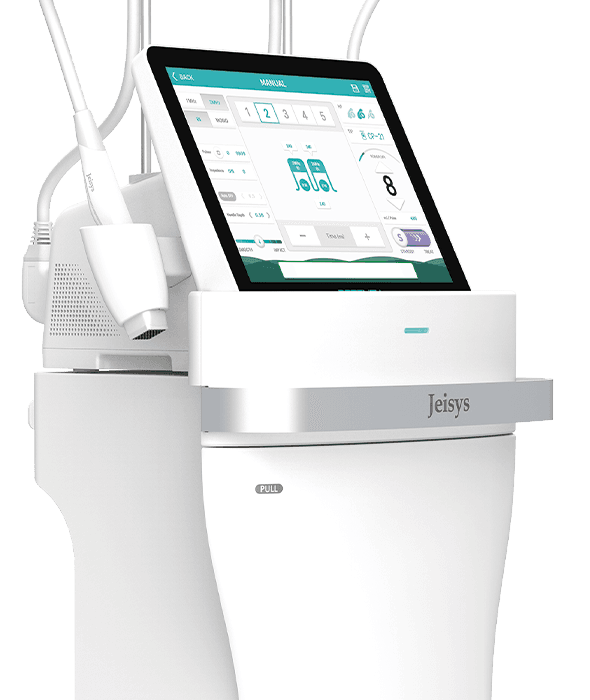
Most preventable events trace back to pass count, overlap discipline and energy titration, so read our operator technique article alongside this one and explore the POTENZA technology. Register for the Jeisys partner portal for protocol documentation and training pathways.
Frequently Asked Questions about Managing RF Microneedling Complications
Management is supportive: barrier repair, strict photoprotection, withdrawal of active topicals and avoidance of heat, with review scheduled rather than left to the patient to initiate. Escalate if the erythema is accompanied by induration, pain or spreading, which suggests infection rather than a prolonged inflammatory response. Prevention lies in energy titration and pass discipline rather than in aftercare.
Grid or linear marking corresponding to the needle array is a technique event, resulting from overlapping passes delivering cumulative thermal load to tissue already treated, or from excessive dwell in one position. Management is supportive with rigorous photoprotection, and prevention is treatment mapping and overlap discipline.
Use intensity, distribution and duration. A finding more severe than the parameters would predict, one following a geometric pattern rather than the treated field, or one persisting well beyond the expected window has crossed into adverse event territory. Increasing erythema, warmth, pain or purulence warrants prompt assessment.
Epidermal injury generally results from energy delivered too superficially, tip insulation not matched to the need for epidermal sparing, poor contact or incomplete insertion altering current distribution, and unrecognised variation in tissue impedance across the field. Management follows standard burn care principles for the depth involved.
Clinicians in Europe operate within a medical device regulatory framework that includes obligations to report certain device-related incidents to the manufacturer and, where applicable, the national competent authority. Thresholds and routes differ between countries, so clinics should establish their own reporting route before an event occurs.
Disclaimer
This article is intended for educational purposes for healthcare professionals and does not constitute clinical advice or a treatment protocol. POTENZA is a CE-marked device indicated for use in dermatologic and general surgical procedures for electrocoagulation and haemostasis. Features and configurations may vary by market. Impedance monitoring supports consistency of energy delivery and does not replace clinical judgement, correct depth selection or operator technique. All parameter selection and patient suitability decisions remain the responsibility of the treating clinician, working within their scope of practice and applicable national regulation.