RF Microneedling for Active Acne: What It Can and Cannot Address
- Articles
Patients and referrers routinely conflate two different clinical problems. Acne scarring is a collagen remodelling problem in tissue where the inflammation has long since resolved. Active acne is an inflammatory and sebaceous problem in tissue that is still reacting. They share a name and almost nothing else, and the treatment rationale differs accordingly.
Our article on RF microneedling for acne scars covers the first. This one covers the second: what fractional RF is proposed to do in active acne, which presentations are and are not appropriate, and where it sits relative to medical management.
The Proposed Mechanism in Active Acne
The interest in RF microneedling for active acne rests on the thermal effect on sebaceous glands. Delivered at an appropriate depth, controlled thermal energy is proposed to reduce sebaceous gland activity and therefore sebum output, addressing one of the contributing factors in acne rather than the condition as a whole.
It is worth being measured about this. The evidence base for RF microneedling in active acne is smaller and less consistent than for scarring, the protocols reported vary considerably, and the mechanism is proposed rather than settled. Presenting it as an established acne treatment overstates what the literature supports, and a clinician-facing audience will notice.
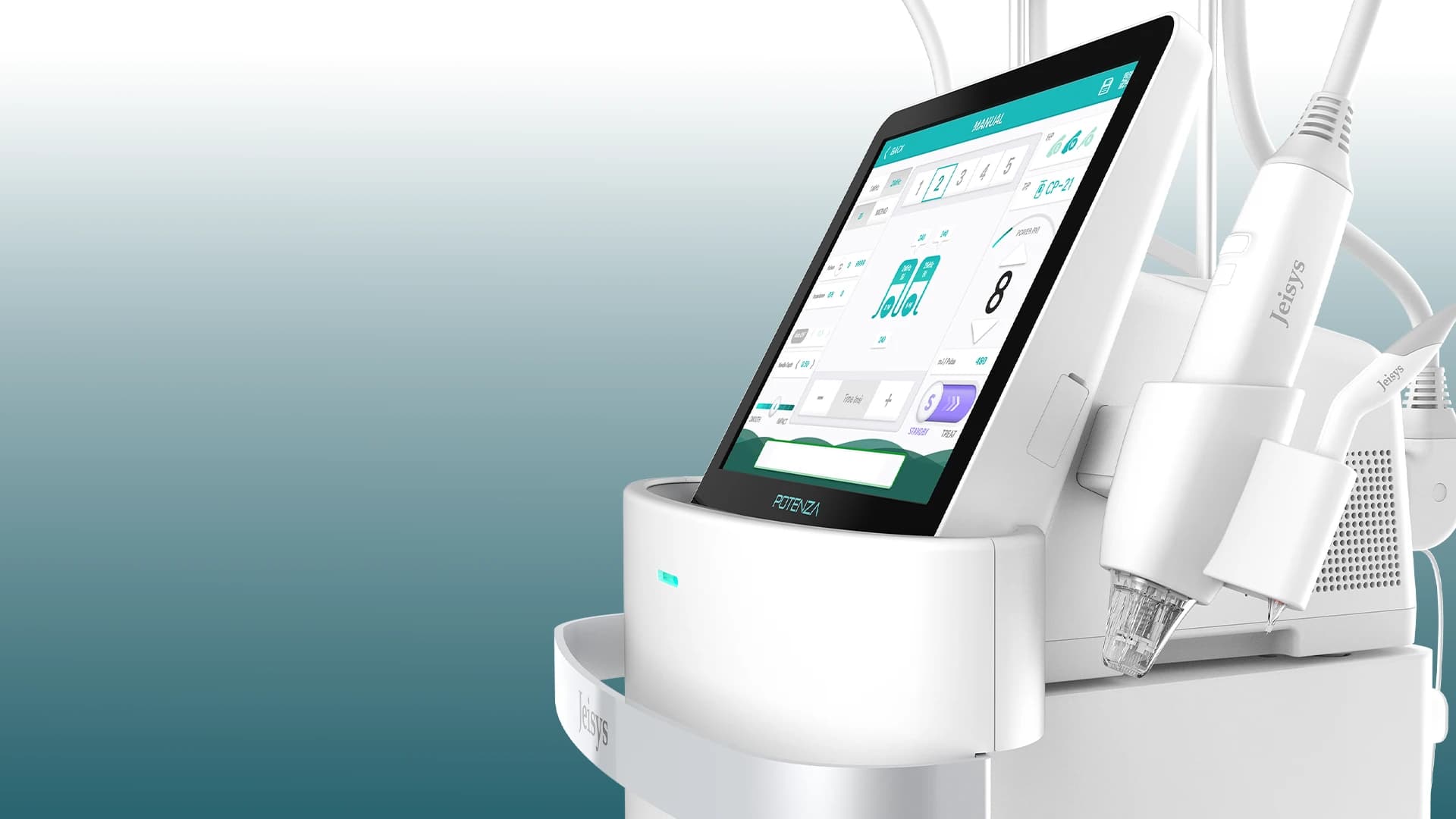
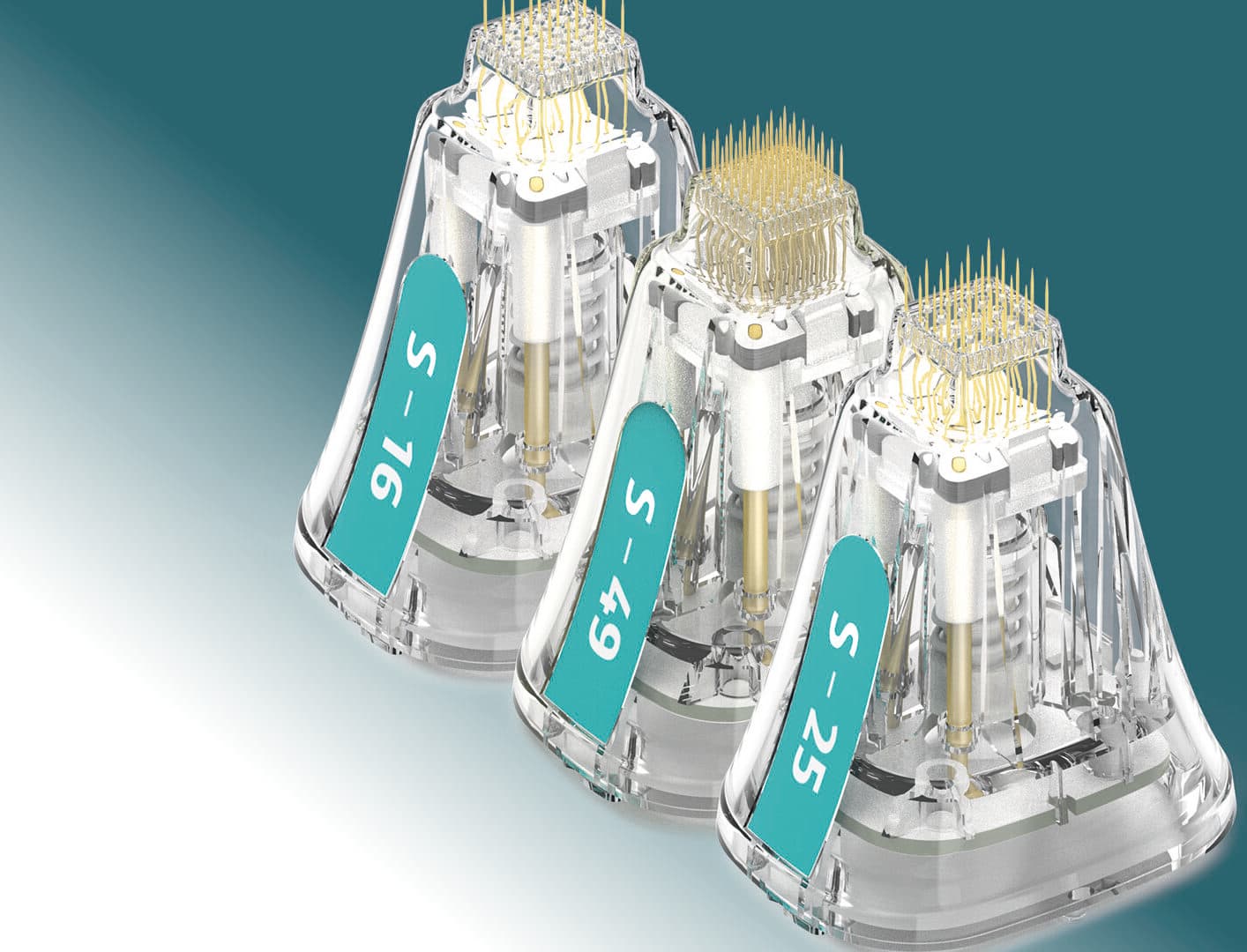
The single-needle handpieces in the POTENZA range deliver targeted high-intensity monopolar energy through one insulated needle at fixed depths of 0.8mm, 1.2mm and 1.5mm, designed for focal accuracy on a discrete lesion rather than field coverage. The full tip range sets out the configurations available.
Which Presentations Are Appropriate
Patient selection matters more here than in most indications, because the tissue is already inflamed.
- Settled or well-controlled acne with persistent sebaceous activity. The most commonly treated presentation, where inflammation has been brought under control medically and the objective is sebaceous and textural.
- Oily, sebaceous skin without active inflammatory lesions. Frequently treated alongside textural concerns such as enlarged pores, where the sebaceous component is the shared target.
- Post-inflammatory textural change in tissue that is no longer actively breaking out, which begins to overlap with scarring management.
Actively inflamed and pustular skin is not an appropriate target. Passing a needle array through pustular or actively infected skin risks spreading bacteria into the dermis through hundreds of micro-channels and worsening the inflammation already present. Most protocols require the acne to be settled before treatment begins, and that sequencing is not a formality.
Nodulocystic disease, acne fulminans and any presentation requiring systemic management belong with medical therapy first, not with an energy device.
Depth and Mode Considerations
A sebaceous target sits at a different level from a rejuvenation target, and treating active acne with a rejuvenation protocol is a common error. Sebaceous glands sit within the dermis, and the depth selected should reflect the level at which they sit at the site being treated rather than the depth that would suit collagen remodelling on the same face.
Site matters too. Sebaceous density and skin thickness on the nose, central cheeks and back differ considerably, so a single full-face depth setting will be wrong somewhere. Zone-by-zone mapping is worth the minute it takes.
Insulated tips deliver energy only at the needle tip, keeping the thermal effect within the dermis and sparing the epidermis, which matters where the overlying skin is already compromised. Mode and frequency determine the character of the heating, as covered in our article on monopolar versus bipolar RF microneedling.
The Isotretinoin Question
This is the most common clinical query on this indication, because a substantial proportion of acne patients are on, or have recently completed, isotretinoin.
Historically, isotretinoin was a firm exclusion with a long interval before any procedural treatment. More recent evidence has led many clinicians to take a less restrictive view, but practice varies across European markets and there is no single agreed interval. The defensible approach is an individual assessment considering dose, duration, time since completion and the patient’s own healing history, with the reasoning documented and a conservative position taken where there is doubt.
The full contraindication and preparation picture is set out in our article on preparing for RF microneedling rather than repeated here.
Realistic Expectations and Adjunctive Management
RF microneedling is an adjunct in active acne, not a replacement for acne therapy. Topical and systemic medical management remains the foundation of treatment, and the device addresses a contributing factor rather than the disease process.
- Improvement is measured in sebaceous activity, skin texture and lesion frequency rather than in clearance.
- A course is required, with intervals allowing inflammation to settle fully between sessions.
- Existing medical management should continue unless the prescriber decides otherwise, and the aesthetic clinician does not alter it.
- Post-inflammatory hyperpigmentation risk is relevant here, since acne patients frequently present in higher Fitzpatrick types and already have an inflammatory tendency.
Consent should be explicit that this is an adjunctive treatment with a developing evidence base, that outcome varies, and that active inflammation must be controlled before treatment can proceed.
Explore the indications we support on our skin concerns page and see the full POTENZA tip range, or register for the Jeisys partner portal for indication-specific protocol documentation and clinical support.
Frequently Asked Questions
It is used as an adjunct in settled or well-controlled acne where sebaceous activity is the target, with the thermal effect on sebaceous glands as the proposed mechanism. The evidence base is smaller and less consistent than for acne scarring, so it is best framed as a contributing intervention rather than an established acne treatment.
Acne scarring is a collagen remodelling problem in tissue where inflammation has resolved, and the objective is neocollagenesis beneath the depression. Active acne is an inflammatory and sebaceous problem in tissue still reacting, and the objective is sebaceous. The depth, the timing and the expectations all differ.
No. Passing a needle array through pustular or actively infected skin risks spreading bacteria into the dermis through hundreds of micro-channels and worsening existing inflammation. Most protocols require the acne to be settled before treatment begins.
There is no single agreed interval and practice varies across European markets, with many clinicians now taking a less restrictive view than was historically standard. The defensible approach is an individual assessment considering dose, duration, time since completion and healing history, documented, with a conservative position where there is doubt.
No. Topical and systemic medical management remains the foundation of acne treatment, and RF microneedling addresses a contributing factor rather than the disease process. Existing management should continue unless the prescriber decides otherwise.
Disclaimer
This article is intended for educational purposes for healthcare professionals and does not constitute clinical advice, a treatment protocol or a recommendation for any specific patient. POTENZA is a CE-marked device indicated for use in dermatologic and general surgical procedures for electrocoagulation and haemostasis. The evidence base for RF microneedling in active acne is developing, individual results vary and no outcome is guaranteed. Prescribing and medical management of acne remain with the treating prescriber, and all treatment decisions remain the responsibility of the treating clinician within their scope of practice and applicable national regulation.