Why the Same RF Settings Behave Differently on Different Skin
- Articles
Two patients are treated at identical settings, with the same tip, the same depth and the same number of passes. One shows the response you expected. The other barely responds, or responds far more than intended. Nothing in the protocol changed, and yet the outcome did.
The same thing happens within a single patient. A setting that produces the intended endpoint on the mid-cheek can under-deliver on the forehead and over-deliver near the jawline, in one treatment, minutes apart. This is not operator error, and it is not device inconsistency. It is impedance, and understanding it explains a great deal of the variation clinicians see.
What Impedance Is, in Clinical Terms
Skin resists the passage of electrical current. That resistance is impedance, and it is not a fixed property of skin in general, it is a variable property of the particular tissue being treated at the moment it is treated.
Radiofrequency energy produces heat as a function of that resistance. Current meets resistance, and the resistance converts electrical energy into thermal energy in the tissue. That relationship is the whole basis of RF heating, and it is why a fixed power setting does not produce a fixed tissue effect. The setting describes what the device offers. The impedance determines what the tissue actually receives.
Our article on the science of heat and needles covers the thermal mechanism in more detail.
What Changes Impedance
Several variables shift tissue resistance, and most of them change during a single treatment:
- Hydration. Well-hydrated tissue conducts differently from dehydrated tissue. Two patients with different hydration status present different impedance to the same setting.
- Skin thickness. Thickness varies markedly between the periorbital area, the mid-cheek, the jawline and body sites, and thickness alters the resistance encountered along the current path.
- Temperature. Tissue temperature rises during a session, and warmed tissue behaves differently from tissue at the start of a treatment.
- Sebum and surface condition. Sebaceous density and the state of the skin surface alter conduction at the point of entry.
- Anatomical site. Underlying structure, vascularity and tissue composition all contribute, which is why site-by-site variation is the norm rather than the exception.
Taken together, these mean that impedance is not stable between patients, between sites, or even across the minutes of one treatment.
Where This Causes Problems
The practical consequence is variation in delivered dose that the operator cannot see and has no direct way to measure at the chairside. It shows up in two opposite directions, and both are avoidable.
Under-treatment is the more common and the less visible. Higher impedance in a given zone means less delivered energy than intended, the endpoint is not reached, and the result underperforms for no apparent reason. The usual response is to escalate energy at the next session, which is the wrong correction if depth or impedance was the actual cause.
Inadvertent over-treatment is less common but more consequential. Lower impedance means more delivered energy than intended, and in areas clinicians deliberately treat conservatively, such as thin periorbital skin or a first session in higher Fitzpatrick types, that is precisely where the margin for error is narrowest. Excessive delivered dose in those zones is a route to prolonged erythema, epidermal injury and pigmentary change.
This is also why comparing settings between clinicians is less informative than it appears. Two practitioners reporting the same energy on the same indication may be delivering materially different treatments.
How Real-Time Impedance Monitoring Addresses It
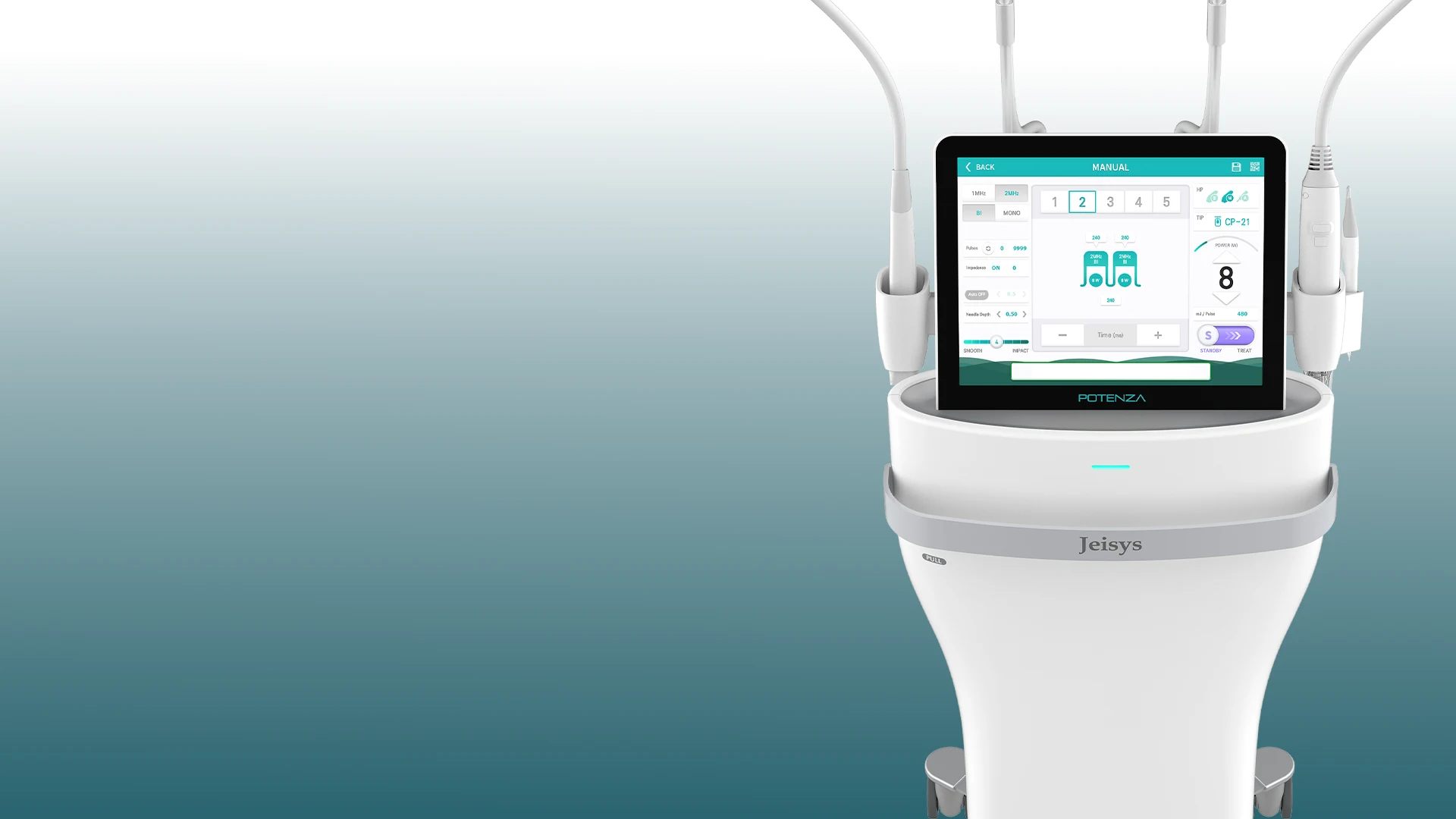
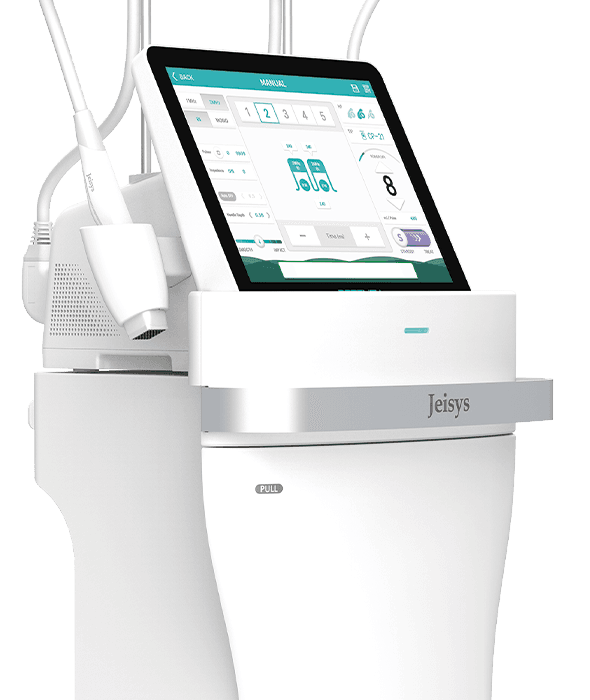
The approach POTENZA takes is to stop holding the setting steady and start holding the delivered dose steady. The system measures skin resistance continuously during delivery and adjusts output in response, so that as impedance rises or falls the energy actually reaching the tissue stays within the intended range.
In practice this means the last zone treated in a session receives comparable delivered energy to the first, and a dehydrated patient and a well-hydrated one are not receiving materially different treatments from an identical protocol. It also means treatments can be delivered with more confidence in the conservative zones, because the variable that most often causes an unintended dose is being actively managed rather than assumed away.
The POTENZA technology page sets out how impedance monitoring sits within the wider platform architecture.
What It Does Not Do
Impedance monitoring improves consistency. It does not remove the need for clinical judgement, and it does not compensate for the decisions made before the pass begins.
Depth selection remains the primary control over which tissue layer receives the energy, and energy delivered at the wrong depth is not a weaker version of the intended treatment, it is a different treatment. Tip and insulation selection still determine whether the epidermis is spared. Overlap discipline still determines cumulative thermal load. Endpoint recognition still determines when to stop.
What impedance monitoring does is remove one uncontrolled variable so that the ones the operator does control are the ones determining the result. Our article on operator technique covers those in detail.
Mode and Frequency Sit Alongside This
Impedance governs how much energy reaches the tissue. Mode and frequency govern where it goes and what shape the heating takes: monopolar current travels to a return electrode producing deep volumetric heating, bipolar current travels between adjacent needles producing a shallower defined zone, and 1 MHz and 2 MHz spread or focus the energy along that path. Our article on monopolar versus bipolar RF microneedling covers that decision in full, and our guide to how RF microneedling works sets out the process end to end.
Explore the POTENZA technology and our operator technique article on our website, and register for the Jeisys partner portal for parameter documentation and clinical support.
Frequently Asked Questions
Because skin impedance varies with hydration, thickness, temperature, sebum and anatomical site, and radiofrequency energy converts to heat as a function of that resistance. A fixed power setting therefore does not produce a fixed tissue effect, and the same protocol can under-deliver in one patient and over-deliver in another.
Impedance is the tissue’s resistance to the passage of electrical current. It is a variable property of the particular tissue being treated at that moment rather than a fixed property of skin, and because RF heating depends on resistance, impedance determines how much of the selected energy actually becomes heat in the dermis.
It is a system that measures skin resistance continuously during energy delivery and adjusts output in response, so the delivered dose stays within the intended range as conditions change. The effect is that the setting is no longer held constant while the delivered energy varies; the delivered energy is held constant instead.
No. It improves the consistency of what is delivered, but it does not change the appropriate dose for the tissue, and it is not a reason to escalate energy. Depth selection, tip and insulation choice, overlap discipline and endpoint recognition all remain the operator’s responsibility.
Skin thickness, sebaceous density, vascularity and underlying structure differ between the periorbital area, the mid-cheek, the jawline and the forehead, and tissue temperature rises as the session progresses. Both effects change impedance across the field, which is why zone-by-zone parameter planning matters more than a single full-face setting.
Disclaimer
This article is intended for educational purposes for healthcare professionals and does not constitute clinical advice or a treatment protocol. POTENZA is a CE-marked device indicated for use in dermatologic and general surgical procedures for electrocoagulation and haemostasis. Features and configurations may vary by market. Impedance monitoring supports consistency of energy delivery and does not replace clinical judgement, correct depth selection or operator technique. All parameter selection and patient suitability decisions remain the responsibility of the treating clinician, working within their scope of practice and applicable national regulation.