What Is POTENZA? The RF Microneedling Platform Explained
- Articles
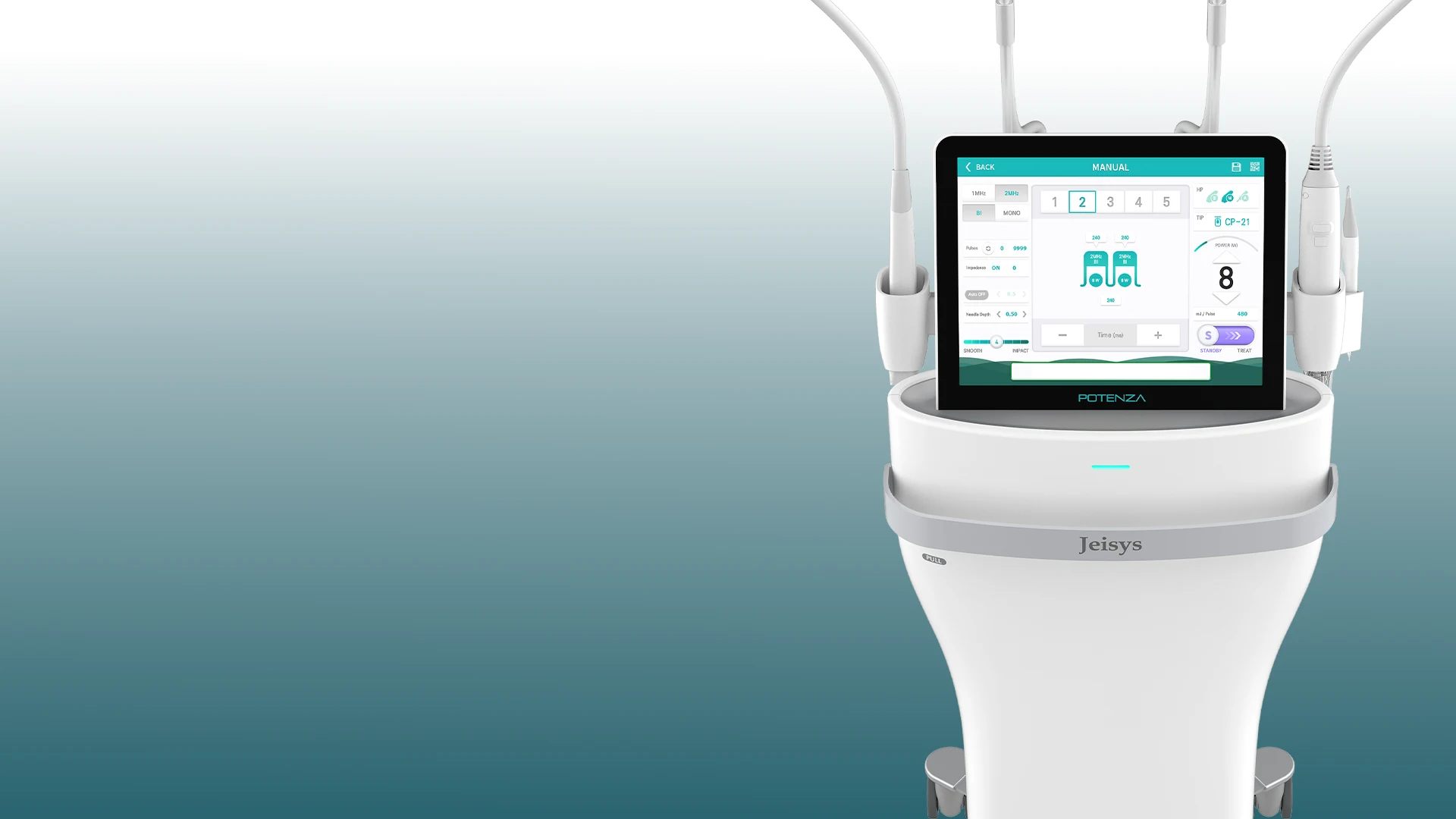
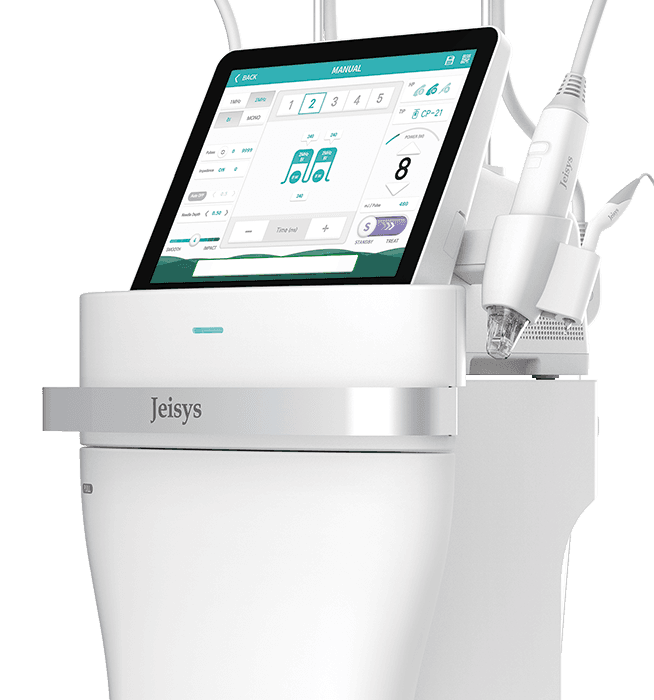
POTENZA is a radiofrequency microneedling platform from Jeisys Medical, CE-marked for use in dermatologic and general surgical procedures for electrocoagulation and haemostasis. It is used in dermatological and aesthetic practice across more than 60 countries, with over three million treatments performed worldwide.
That is the short answer. The longer one is what distinguishes a platform from a single-protocol device, and it is the distinction that matters most when a clinic is deciding what to buy or a clinician is deciding what to train on. This article is an overview and a starting point, linking out to the detailed articles rather than repeating them.
What Makes It a Platform Rather Than a Device
A single-protocol device delivers one heating profile through one or two tips. The operator adjusts around it. A platform gives the operator several independent variables to set against the tissue in front of them:
- Dual radiofrequency generators. Monopolar and bipolar delivery, each available at 1 MHz and 2 MHz, giving four distinct heating profiles from the same handpiece with stable delivery and minimal interference between circuits.
- Fourteen interchangeable tips. Insulated, semi-insulated, delivery, single-needle and non-invasive electrode tips, each suited to different tissue objectives.
- Needle depths from 0.25mm to 4.0mm. Depth is the primary control over which tissue layer receives the energy, and the range covers thin periorbital skin through to thick body tissue.
- Needle densities of 16, 25 and 49. Density sets the ratio of treated to spared tissue, and therefore both treatment intensity and expected downtime.
- Real-time impedance monitoring. The system measures skin resistance continuously during delivery and adjusts output to hold the delivered dose steady as tissue conditions change.
Set together, these determine where energy lands, how it is distributed and what shape the thermal effect takes. The POTENZA technology page sets out the architecture in full.
How RF Microneedling Works, in Brief
Radiofrequency energy is delivered through microneedles directly into the dermis, producing controlled thermal coagulation in discrete columns surrounded by untreated tissue. That fractional pattern is what drives dermal remodelling while leaving a reservoir of healthy tissue to support repair.
Because the energy is delivered through needles rather than absorbed by a surface chromophore, the mechanism is largely independent of epidermal melanin. Our guide to how RF microneedling works covers the process in detail, and our article on the science of heat and needles covers the underlying thermal behaviour.
What the Platform Is Used For
Practitioners use the principles of RF microneedling across a broad range of dermatological concerns. Each has its own article, and this is a summary rather than a substitute for them:
- Dermal rejuvenation and laxity. Structural remodelling of the mid to deep dermis, addressing fine lines, wrinkles and skin tightening.
- Scarring. Atrophic acne scarring, alongside surgical, traumatic and hypertrophic presentations.
- Textural concerns. Enlarged pores and general textural refinement.
- Periorbital, neck and jowl areas. Thin-skin and lower-face indications requiring conservative parameters.
- Body areas. Stomach, arms and other regions where tissue thickness differs considerably from the face.
- Vascular and pigmentary support, and regenerative delivery protocols where topical actives are introduced during the treatment.
The full range is set out on our skin concerns page, and our article on RF microneedling and topicals covers the regenerative delivery side.

What a Typical Treatment Involves
Treatment begins with assessment, skin type documentation, standardised photography and consent. The treatment field is then mapped by zone, since a face is not one tissue and a single full-face setting rarely suits every area.
Parameters are selected per zone: tip, depth, density, mode and frequency. Passes are delivered systematically within each zone with disciplined overlap control, working to a defined clinical endpoint rather than to visible erythema alone. Expected post-treatment findings include erythema, oedema, pinpoint bleeding and micro-crusting, resolving over days depending on the parameters used.
Most indications require a course rather than a single session, with intervals set to allow remodelling between treatments. Collagen continues to reorganise for months afterwards, so the visible endpoint of a course is not reached at the final appointment.
Choosing Tips, Modes and Settings
Three decisions sit behind every treatment, and each has its own article. Tip selection is governed by depth, density and insulation, covered in our guide to choosing an RF microneedling tip and in the full POTENZA tip range.
Mode and frequency determine the character of the heating, explained in our article on monopolar versus bipolar RF microneedling. And the reason a fixed setting does not produce a fixed tissue effect is covered in our article on why the same settings behave differently on different skin.
Training, Support and Documentation
Outcome variance between operators using the same device and the same parameters is substantial, and most of that variance is technique. Structured training therefore changes results more reliably than changing settings, which is why training depth across a team matters as much as the platform itself.
Tip-specific parameter documentation, indication protocols and training pathways are held in the Jeisys partner portal. Clinical evidence and treatment outcomes are set out on our proven results page.
Explore the POTENZA technology and our proven results on our website, and register for the Jeisys partner portal for protocol documentation, parameter guidance and training pathways.
Frequently Asked Questions
POTENZA is a radiofrequency microneedling platform from Jeisys Medical, CE-marked for use in dermatologic and general surgical procedures for electrocoagulation and haemostasis. It delivers RF energy through microneedles into the dermis to produce controlled thermal coagulation and dermal remodelling, and is used in practice across more than 60 countries.
It delivers controlled thermal coagulation to the dermis through a fractional needle array, driving collagen remodelling while sparing surrounding tissue. Practitioners apply it across dermal rejuvenation and laxity, scarring, textural concerns including pores, periorbital and lower-face areas, body areas, and regenerative delivery protocols.
It combines dual radiofrequency generators offering monopolar and bipolar delivery at both 1 MHz and 2 MHz with 14 interchangeable tips, needle depths from 0.25mm to 4.0mm and densities of 16, 25 and 49 needles. Real-time impedance monitoring adjusts output as skin resistance varies, so the delivered dose stays consistent rather than the setting staying consistent.
Because energy is delivered through needles into the dermis rather than absorbed by epidermal melanin, the chromophore-dependent element of pigmentary risk seen with many light-based modalities is largely removed, and the platform is used across Fitzpatrick I to VI. Risk is not eliminated, and outcomes still depend on tip selection, parameter discipline, technique and aftercare.
Most indications require a course rather than a single session, with the number and interval set against the indication, the tissue and the individual response. Collagen continues to remodel for months after treatment, so the full result is not visible at the final session.
Disclaimer
This article is intended for educational purposes for healthcare professionals and does not constitute clinical advice or a treatment protocol. POTENZA is a CE-marked device indicated for use in dermatologic and general surgical procedures for electrocoagulation and haemostasis. Device configuration, tip availability and regulatory status vary by market. Individual results vary and no outcome is guaranteed. All parameter selection and patient suitability decisions remain the responsibility of the treating clinician, working within their scope of practice and applicable national regulation.