The Clinical Evidence for RF Microneedling: What the Studies Show
- Articles
This article summarises what the published literature establishes about radiofrequency microneedling, and what it does not. It is not a sales argument, and the most useful thing it can say is the thing most content on this subject avoids: the evidence is considerably stronger for some indications than others.
A clinician deciding what to offer, and what to promise, needs to know which is which. So does a patient being asked to commit to a course.
How the Evidence Is Distributed
The most useful single reference point is the 2021 critical review published in Dermatologic Surgery, which searched MEDLINE and EMBASE and included 42 higher-quality studies, defined as randomised, split-body or blinded human studies. The distribution across indications tells you most of what you need to know:
- Skin rejuvenation: 14 studies, the largest group by a clear margin.
- Acne scarring: 7 studies.
- Acne vulgaris: 6 studies.
- Striae: 5 studies.
- Axillary hyperhidrosis: 5 studies.
- Melasma: 2 studies.
- Rosacea, cellulite and androgenetic alopecia: 1 study each.
The review concluded that radiofrequency microneedling is an effective intervention that can be used repeatedly and safely, including in darker skin phototypes, and noted that dermal remodelling is slow and progressive, continuing to improve for up to six months after treatment. It also framed the comparison against other energy-based devices as unresolved.
Indication by Indication
Skin laxity and lower-face tightening. The best supported indication, with the largest number of controlled studies. Outcomes are typically measured by investigator assessment scales and patient satisfaction, and the effect is gradual rather than immediate. See our article on skin tightening and laxity.
Acne scarring. Well represented in the controlled literature, and supported by a 2025 systematic review of fractional radiofrequency microneedling as a monotherapy in acne scar management. Response varies with scar morphology, and atrophic scarring is better studied than other presentations. See our article on RF microneedling for acne scars.
Active acne and sebaceous skin. Six studies in the review, with the thermal effect on sebaceous glands as the proposed mechanism. Protocols vary and it is positioned as adjunctive to medical management. See our article on RF microneedling for active acne.
Striae and textural concerns. Five studies for striae, with outcomes graded on photographic scales. Pores and general textural refinement are frequently reported alongside rejuvenation endpoints rather than as primary outcomes.
Pigmentary disorders. Only two melasma studies met the review’s inclusion criteria, which is thin for a condition where treatment decisions carry real risk. See our article on RF microneedling for melasma and pigmentation.
Axillary hyperhidrosis. Five studies, but the two head-to-head comparisons against intradermal botulinum toxin-A both favoured the toxin, and the 2024 randomised controlled trial found the radiofrequency effect declined faster. Covered in full in our article on RF microneedling for excessive underarm sweating.
Hair loss. A single androgenetic alopecia study in the review. The larger evidence base belongs to mechanical microneedling combined with topical therapy, not to the radiofrequency variant. See our article on RF microneedling for hair loss.
The Methodological Problems Running Through the Field
These apply across almost every indication above, and a clinician reading any individual study should hold them in mind.
Small sample sizes. Many studies run to a few dozen participants, which limits the confidence that can be placed in any single result.
Heterogeneous protocols and devices. Depth, energy, mode, density, pass count and session interval differ between studies, and so do the devices themselves. This makes cross-study comparison and pooling genuinely difficult.
Short follow-up. Remodelling continues for months, yet follow-up frequently ends well before the effect has matured or had a chance to regress.
Subjective outcome scales. Investigator and patient assessment scales dominate, with objective measurement less common, which introduces assessor variation.
Inconsistent blinding. Blinding is difficult in device studies and is not always achieved, and split-body designs, while useful, carry their own limitations.
None of this means the treatment does not work. It means the precision of the claims should match the precision of the evidence, which in practice means talking about likely direction and magnitude of change rather than quoting percentages as though they were established.
The practical consequence for a manufacturer and for a clinic is the same: where a claim cannot be traced to a study, it should not be made. That is a stricter standard than the sector generally applies, and it is the one that holds up when a clinician checks.
What This Means When Setting Expectations
For a clinician in consultation, the practical translation is straightforward. Be most confident about rejuvenation, laxity and atrophic acne scarring. Be measured about active acne, striae and pigmentary disorders. Be explicit that hyperhidrosis and hair loss are emerging applications where the evidence is early or where an established alternative performs better.
Explain that change is gradual and continues for months after the final session, that a course is required, and that no outcome can be guaranteed. Our articles on what results to expect and how many sessions are needed are the patient-facing versions of this conversation.
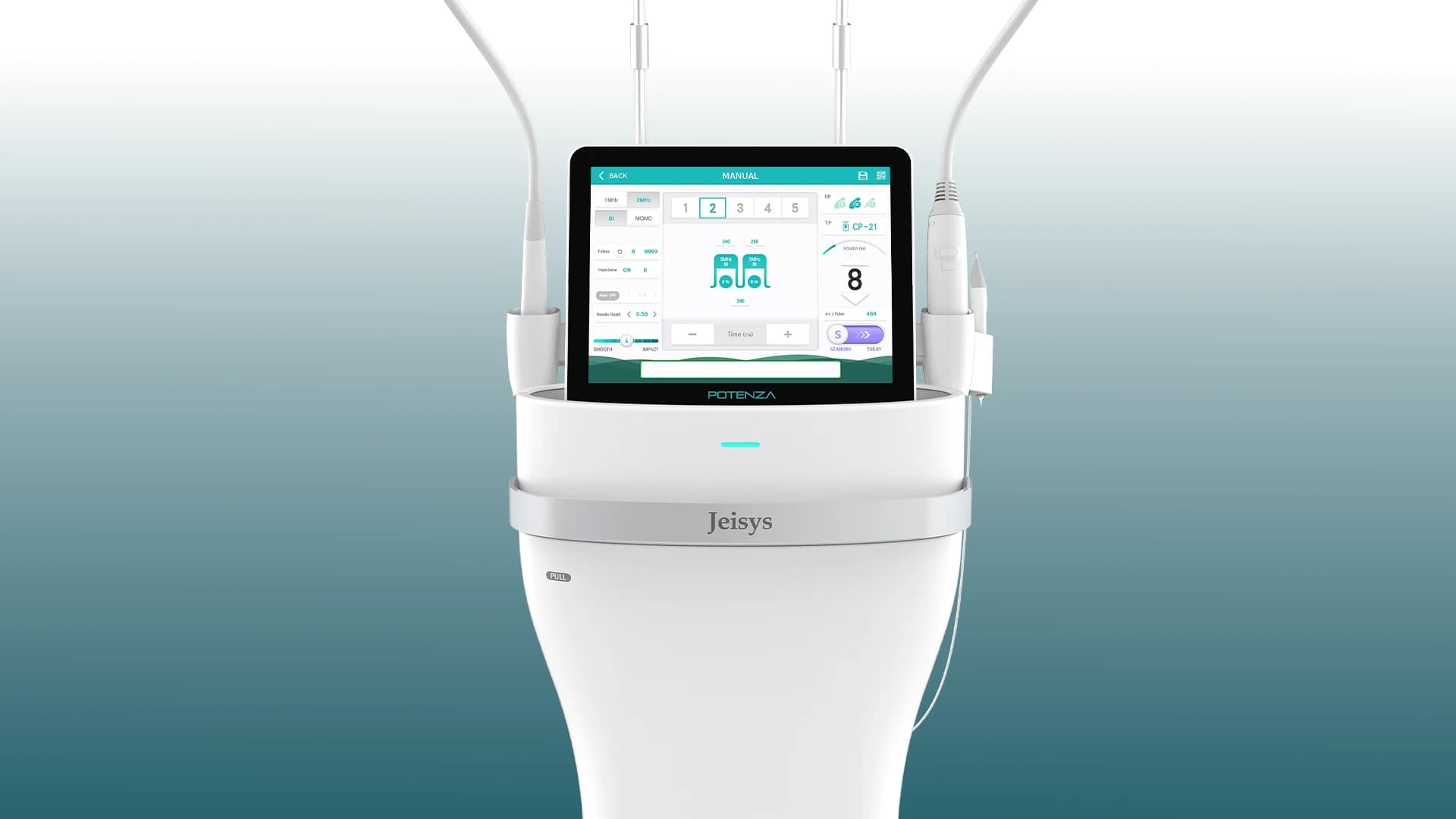
See our proven results and the POTENZA technology, and register for the Jeisys partner portal for clinical documentation and the published evidence base.
Frequently Asked Questions about RF Microneedling Clinical Studies
Disclaimer
This article is intended for educational purposes for healthcare professionals and summarises published literature as at the date of writing. It does not constitute clinical advice, a treatment protocol or a systematic review, and readers should consult the primary sources listed. POTENZA is a CE-marked device indicated for use in dermatologic and general surgical procedures for electrocoagulation and haemostasis. Studies cited were conducted with a range of devices and protocols and do not necessarily reflect any single platform. Individual results vary and no outcome is guaranteed. All treatment decisions remain the responsibility of the treating clinician, working within their scope of practice and applicable national regulation.